
MONROVIA – Across Liberia’s bustling coastal markets, resilience is measured in long nights guarding inventory on sandy beaches, hours spent drying catches under the sun, and the relentless daily hustle to secure a future for the next generation.
For many women fishmongers, market trading is more than a livelihood. It is a lifeline.
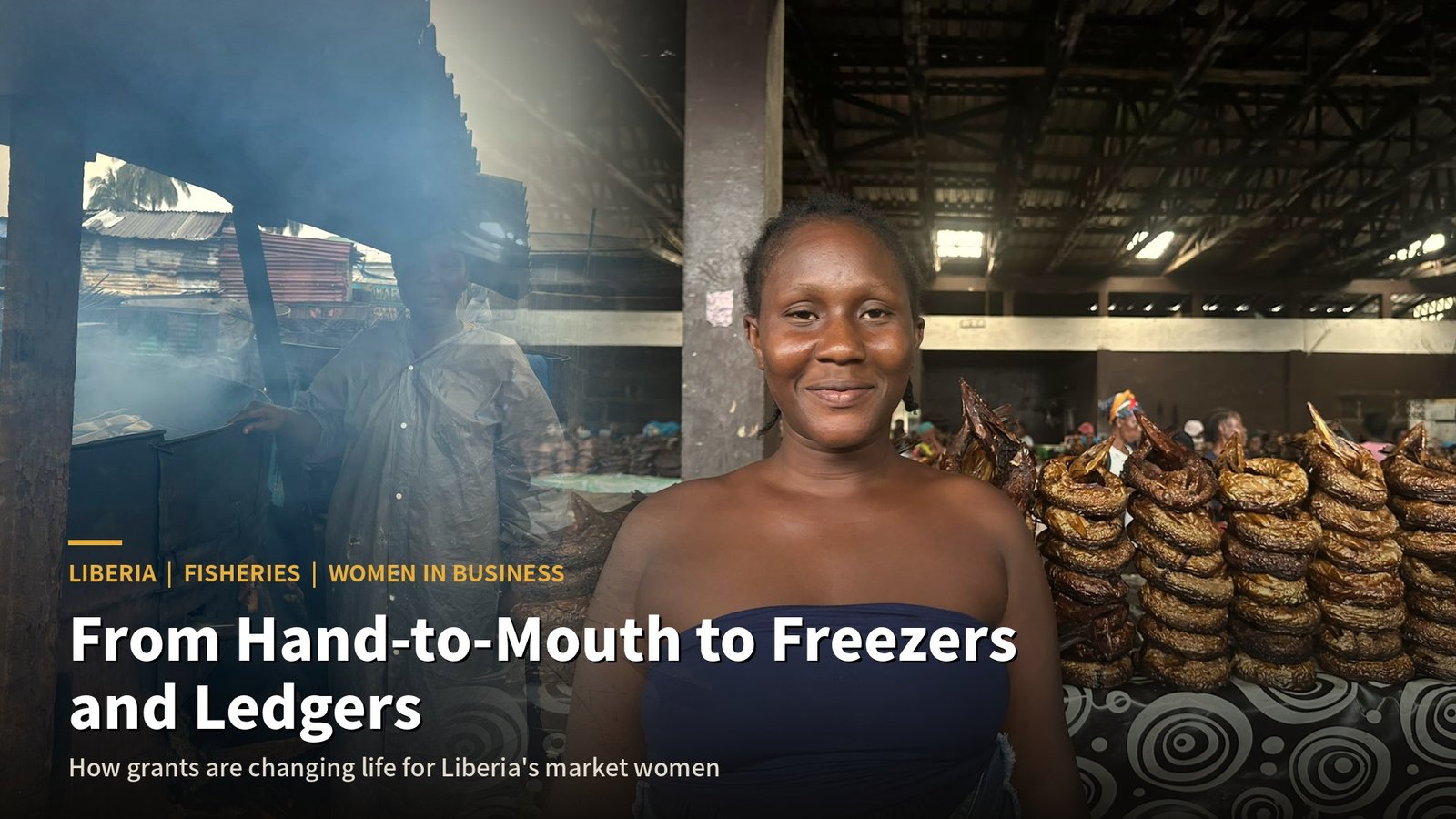
Now, targeted grants are beginning to turn the tide for women trying to break the cycle of hand-to-mouth trading. The Liberia Sustainable Management of Fisheries Project (LSMFP), implemented by the National Fisheries and Aquaculture Authority (NaFAA), has supported more than 1,670 women across four coastal counties. Alongside it, the government’s Recovery of Economic Activity for Liberian Informal Sector Employment (REALISE) Project is testing a similar model with fishmongers in West Point.
“I can stand on my own”
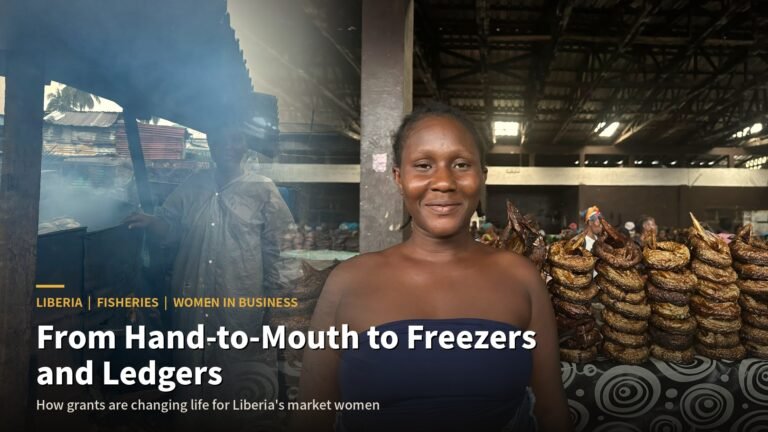
For Princess Flomo, a 32-year-old fishmonger, life in the market has always meant hard work. Before she received support, her business was small, and it was hard to look beyond the needs of each day.
That changed when she received a $450 grant through the REALISE Project’s support for women entrepreneurs.
Rather than spend the money on daily expenses, Princess reinvested it. She set aside working capital to buy fish in bulk and keep a steady cash flow. Today, she plans to expand her stock and make sure her child stays in school.
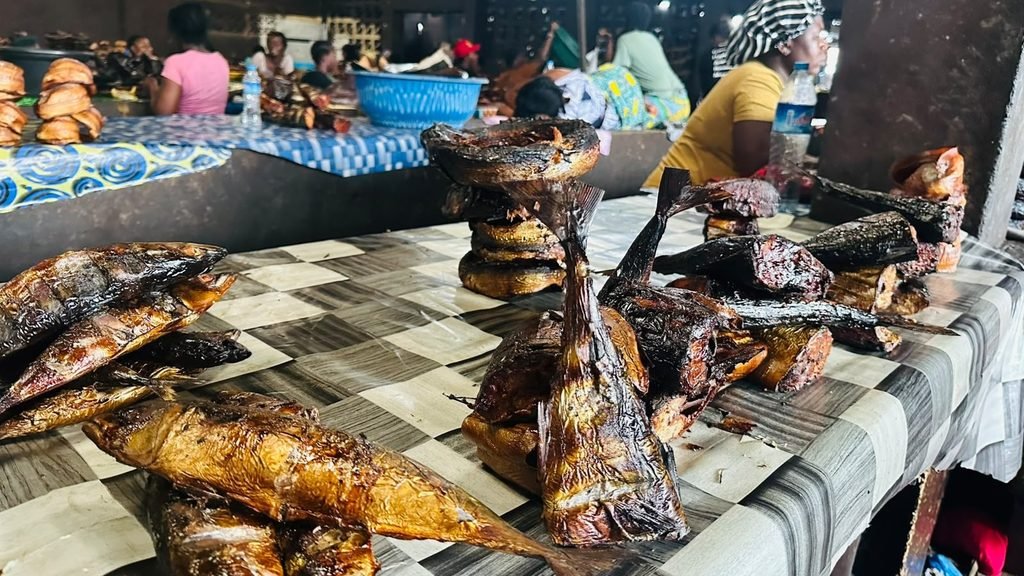
Susanna Doo, a mother supporting a household of ten, saw her life change after receiving a grant from NaFAA last year. She once sold fish for other fishmongers. Now she runs her own business.
“From the time NaFAA gave me money, my children are in school, and I can stand on my own to run my own business without depending on anyone else,” Susanna said. The support, she added, has allowed her to pay rent and buy stock in larger quantities.
The physical toll of coastal trade
While grants have given many women a crucial stepping stone, fish trading remains physically punishing work.
Rose Timbeh, a 35-year-old mother of four, endures immense strain to keep her business going. To buy high-value coastal fish, she travels to the coast, braves harsh weather, sleeps on the beach, and spends days away from home.
Money has been tight. At one point, it forced her 14-year-old son to leave school for a time. Still, Rose remains committed to growing her dry fish business, which she sees as the only foundation for her family’s future.
A pilot in West Point
The REALISE Project, a social protection initiative run by the Liberian government through the Ministry of Gender, Children and Social Protection with World Bank support, is showing promising early results in its pilot phase, according to Henry Sumo, the project’s Communications Officer.
The pilot is designed to test a targeted support model, using fishmongers as the main focus, before the current project cycle ends in December.
“We are the Government Social Protection Program, so the World Bank said, ‘Let’s test this, use fishmongers as a pilot, and see how it works,'” a project representative explained.
The initiative began with joint registration and training sessions. From a master list of 312 eligible people in West Point provided by NaFAA, 50 were selected. West Point, one of Monrovia’s most densely populated communities, has 30,847 residents, 15,915 men and 14,932 women, according to the Liberia Institute of Statistics and Geo-Information Services (LISGIS).
Each participant is to receive $900, paid in two equal tranches of $450. The first tranche has been paid, and the second is scheduled for November.
Although the pilot has centered on West Point, the broader program includes sub-projects across the country. Officials say any expansion to include more fishmongers will depend on evaluations after this first cycle ends.
Follow-up visits in West Point found clear improvements in how participants run their businesses:
- Refrigeration: Participants who once had to carry their fish to public freezers every evening used their grants to buy their own freezers.
- Larger stock: Several fishmongers grew their fresh fish stock from 10,000 to 20,000 Liberian dollars to as much as 50,000 Liberian dollars, the official said.
Beyond cash, beneficiaries received training in business management and bookkeeping. Participants said the training changed how they work, moving them from barely tracking their money to keeping careful records of daily sales and cash flow.
Scaling up across four counties
The larger LSMFP effort has reached more than 1,670 women in Montserrado, Margibi, Grand Cape Mount and Grand Bassa counties, a major step in transforming Liberia’s informal fisheries sector.
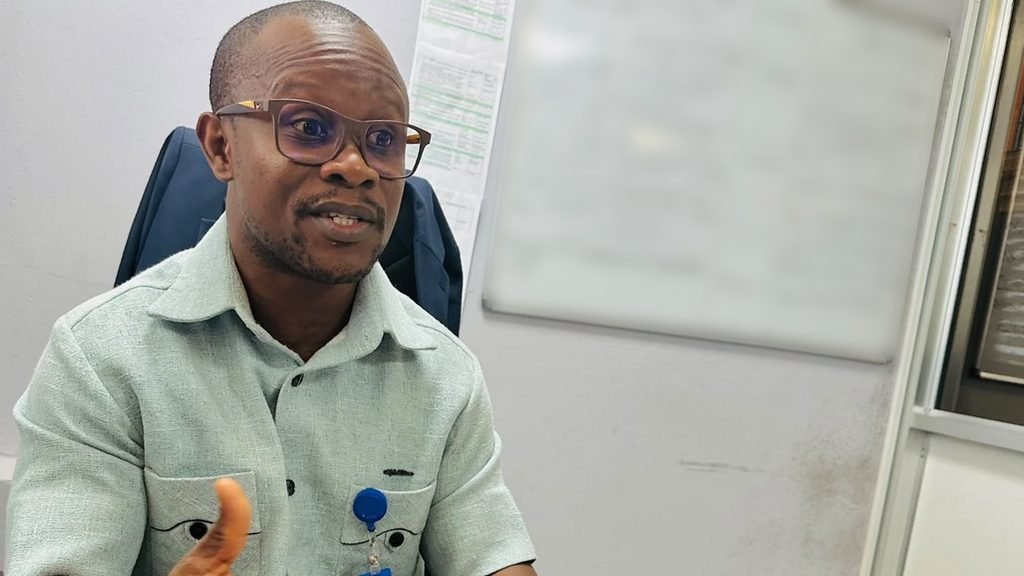
Project Coordinator Atty. Abraham W. Dioh said the support falls under Component 2.2 of the LSMFP, which is designed to grow informal and nano-businesses owned by women into sustainable small and micro-enterprises.
“Women play an integral role in the fisheries sector, ensuring our communities receive the essential nutrients derived from fish and fishery products,” Dioh said. “This component was dedicated to empowering women to enhance their businesses and improve their livelihoods.”
To ensure fairness and transparency, NaFAA ran the grant process in partnership with Conservation International (CI). Before applications opened, the project ran jingles, radio announcements and broadcasts in local languages, and sent field teams into coastal communities to explain how to apply. Nearly 6,000 women applied in the first phase.
A panel of civil society representatives, fisheries leaders and technical specialists reviewed the applications, Dioh said. Awards were based on business performance rather than a fixed amount. The original design called for matching grants to prevent elite capture, but the criteria were later changed to allow both small and large grants once organizers realized most fishmongers run informal businesses.
The project also faced hurdles, including the lack of a single database of fishmongers and many similar names in coastal communities. NaFAA responded with a thorough enumeration exercise to verify beneficiaries. The project, Dioh said, has laid a strong foundation for women’s economic empowerment and sustainable fisheries in Liberia.
The women still waiting
For all the success stories, many market women say barriers remain. Vendors like Jima and Lisa, single mothers working tirelessly to feed and educate their children, describe the struggle of navigating application processes and finding capital without any outside help.
Many traders who have not received support want wider outreach and simpler applications, so that more self-reliant women can get the capital they need to move from micro-trading to stable, thriving businesses.
As the programs continue, beneficiaries like Princess and Susanna praise the government and project organizers. Sustained financial support, they say, is key to lifting up Liberian women, keeping children in school, and building a resilient national economy from the ground up.
About The Author