
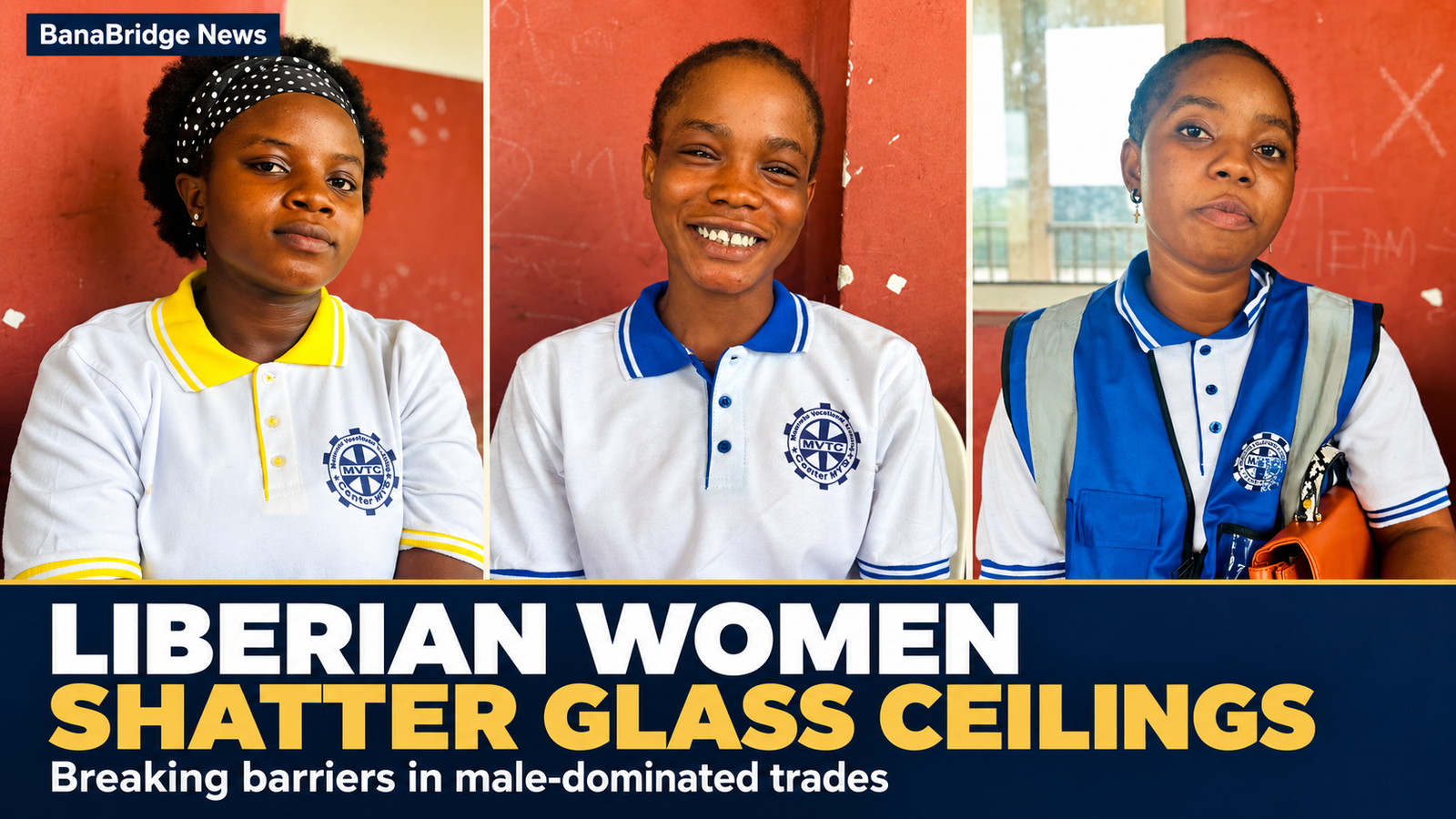
Liberian Women Shatter Glass Ceilings in Male-Dominated Trades
Across Liberia, women are stepping past traditional boundaries to enter trades long dominated by men.
For some, vocational training offers a path to financial independence and a way to support their families. But the cost of tools, safety equipment and further education can make that path difficult.
For Esther Teah, enrolling in residential plumbing at the Monrovia Vocational Training Center (MVTC) came with challenges. Eight months into her studies, she remains determined to succeed alongside her male classmates.
“For the past eight months I have been in class, I have learned a lot, and I was motivated by women who have succeeded in this career,” Teah said.
She hopes to achieve financial independence, support her family and contribute to Liberia’s development. She draws inspiration from ambitious women who are raising the country’s flag through their achievements.
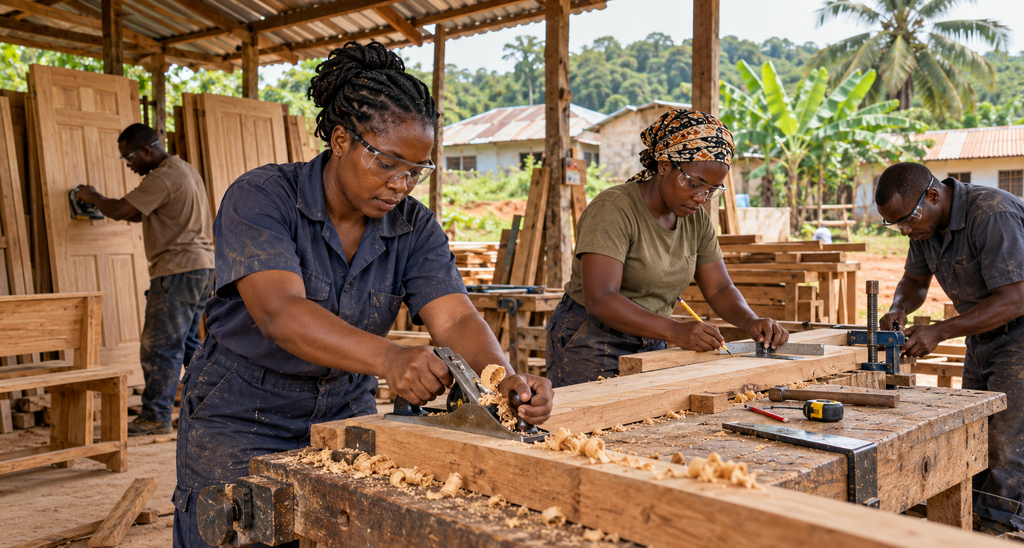
Similarly, 25-year-old Venus sees learning a trade as a way to support herself after school. However, securing safety boots and a helmet for practical training has been difficult. Her father, who pays for her education, had to prioritize her younger sibling’s school fees.
For Pinky Blamo, financial constraints and the time required to complete a university degree led her to pursue practical training as a first step toward a career in engineering.
“So I want to learn the practical aspect first before going to the university to advance my skill with a degree,” Blamo said.
Acquiring a $250 toolkit, including screwdrivers, socket sets and bearing spanners, has been another challenge. Despite the expense and occasional friction with classmates, she remains determined to establish herself in the field.
Blamo says success requires persistence. She encourages other women to enter male-dominated trades and put their hands to work.
At MVTC, Director of Training Stanley S. Kamara says helping students understand what is expected of them is an important part of keeping them motivated.
The institution also follows students’ progress beyond the classroom. Monitoring begins during internships and continues as graduates enter the workforce. Through follow-ups with employers, staff assess whether graduates are retained and, when they are not, whether gaps in occupational skills contributed.
The findings help the institution improve its training, Kamara says.
Female students perform at nearly the same level as their male counterparts, according to Kamara, and often record better attendance. He describes them as motivated, consistent and committed to their studies.
Financial hardship and dropouts remain concerns. Staff offer additional training sessions to help students who have fallen behind catch up with their classmates.
Kamara encourages parents to consider vocational education for their children, particularly young women.
For training institutions, however, providing the necessary practical materials and keeping pace with new technology remain costly. Kamara identifies these as major challenges in preparing students for the demands of modern workplaces.
Support for women’s livelihoods also extends beyond vocational institutions.
The Liberia Women Empowerment Project (LWEP), implemented by the Ministry of Gender, Children and Social Protection, operates in Gbarpolu, Rivercess, Grand Cape Mount, Bomi and Grand Gedeh counties, as well as rural Montserrado.
Project officials report that livelihood cash grants have supported 418 women-led businesses, benefiting more than 9,000 people across 498 communities.
Through access to skills, finance and markets, the project aims to reduce poverty, increase household incomes and strengthen women’s participation in Liberia’s economy under the government’s ARREST Agenda.
The scale of the remaining challenge is reflected in the Women’s Empowerment and Nutrition Survey by the Liberia Institute of Statistics and Geo-Information Services (LISGIS). It found that 93.4 percent of women in agricultural households were classified as disempowered under the survey’s measures.
Beyond the statistics, individual businesses show what practical skills can mean for a family.
In Redlight, Victoria Jallah, a 38-year-old single mother of four, has turned skills learned from her late mother into a livelihood.
Jallah says her business generates L$30,000 per production cycle. The income has helped her purchase land, build a home and support her children. She now runs a soap-making and tie-dye school for young women and girls.
“I never knew that the knowledge I acquired over two decades would be a source of income that will feed me, pay my children’s school fees, and provide shelter for my family,” Jallah said.
About The Author