
NEW YORK, September 30, 2026 — Liberia has urged nuclear-armed countries to fulfill their disarmament commitments, warning that reliance on mutual destruction threatens civilian lives while growing military spending leaves urgent development needs underfunded.
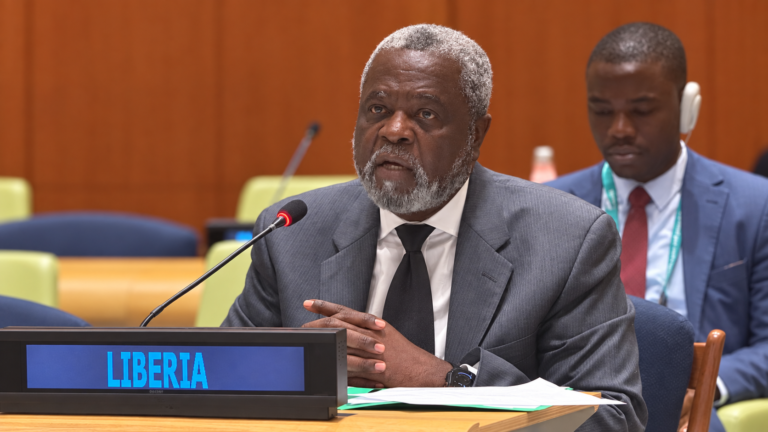
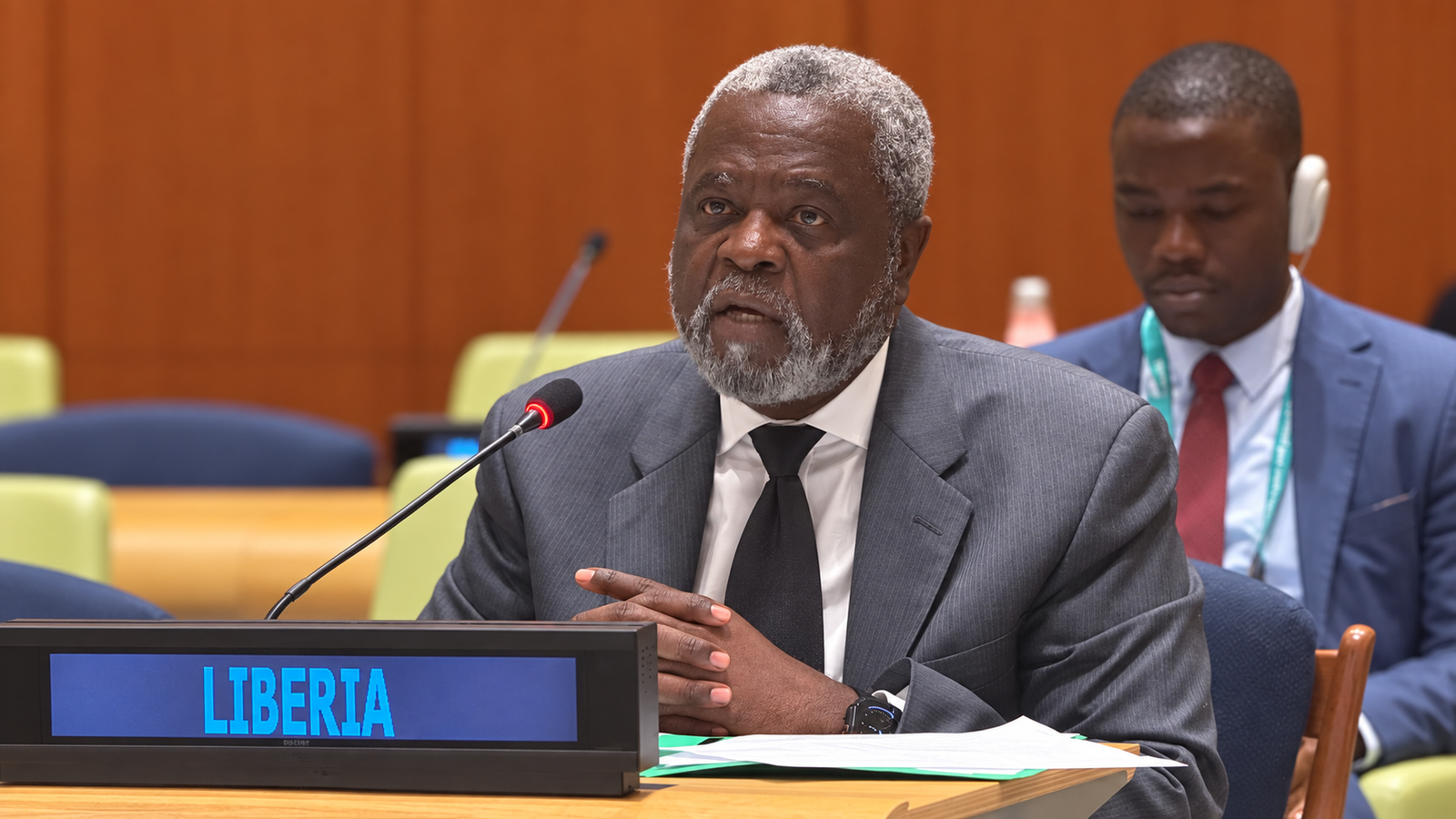
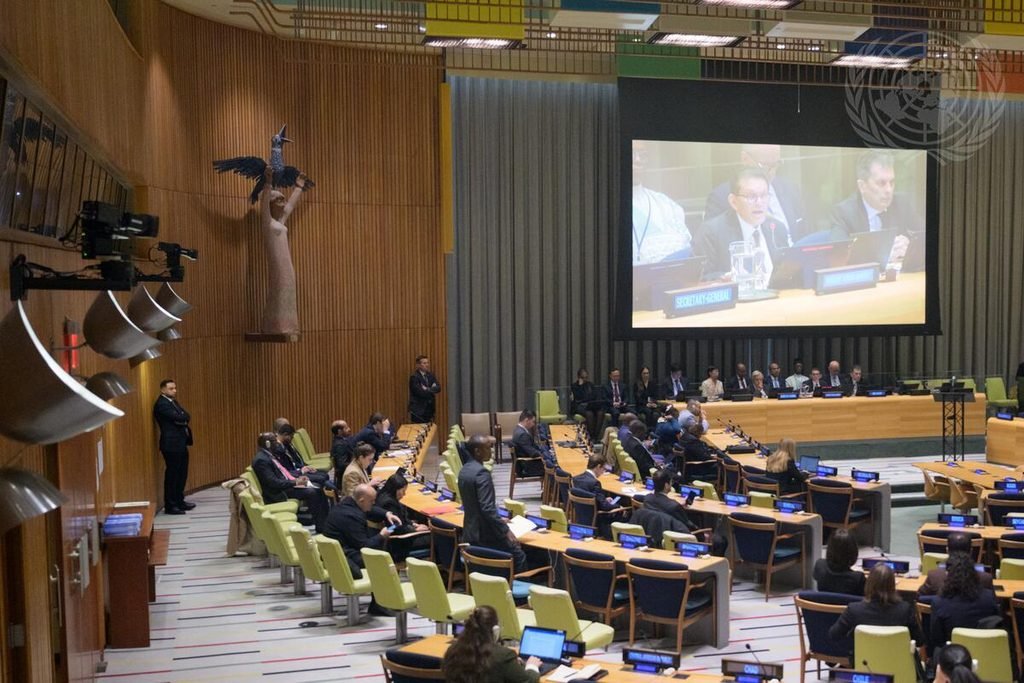
Liberia’s Permanent Representative to the United Nations, Ambassador Lewis G. Brown II, delivered the appeal on September 29 during a high-level plenary meeting commemorating the International Day for the Total Elimination of Nuclear Weapons in New York.
“Security built on mutual annihilation is not peace; it is merely an armistice with catastrophe,” Brown said.
“A single detonation would recognize no borders, spare no civilians, and invite consequences no humanitarian institution could heal.”
Brown urged countries outside the Treaty on the Non-Proliferation of Nuclear Weapons, known as the NPT, to join the agreement and reminded nuclear-weapon states of their obligations under Article VI.
“You must honor your solemn declaration: a nuclear war cannot be won and must never be fought,” he said.
Article VI commits every party to pursue good-faith negotiations on ending the nuclear arms race and achieving nuclear disarmament, as well as a treaty on general and complete disarmament under international control.
Brown expressed concern about the failure of successive NPT review conferences to agree on a substantive outcome.
“Following three successive Review Conferences without substantive consensus, dialogue must replace paralysis,” he said.
The latest conference ended on May 22, 2026, without substantive consensus. UN Secretary-General António Guterres expressed disappointment at the failure to reach agreement.
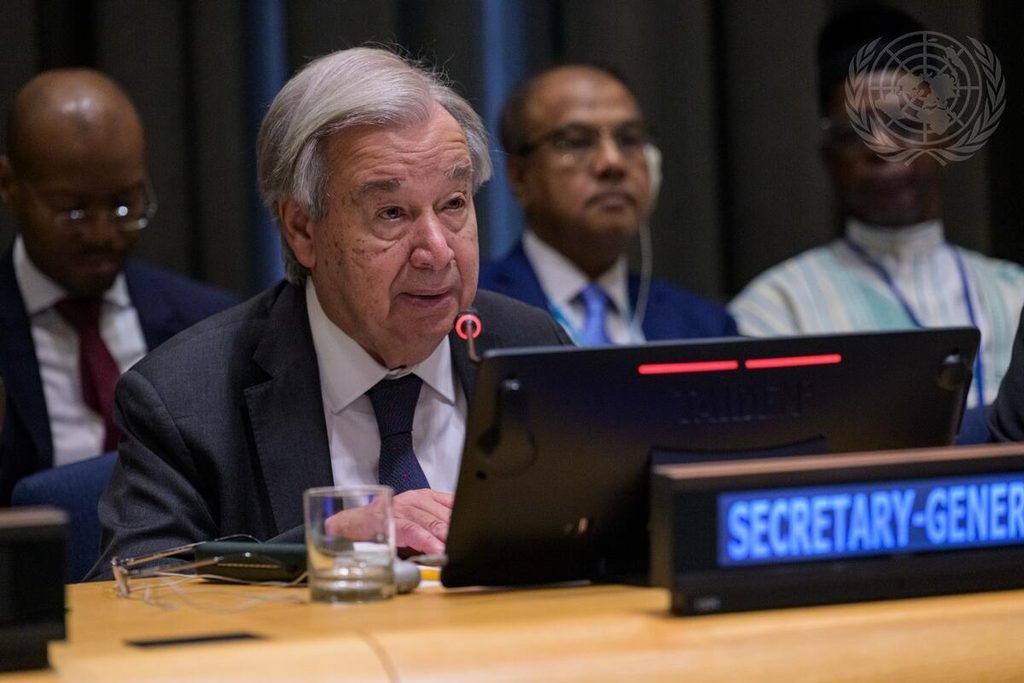
The wider arms-control system has also weakened. New START, the U.S.–Russia strategic nuclear arms-control treaty, expired on February 5, 2026, without a successor arrangement. At the September 29 commemoration, Guterres urged Washington and Moscow to negotiate a replacement framework.
The Stockholm International Peace Research Institute estimated that the world’s nine nuclear-armed states held 12,187 warheads in January 2026. That total includes retired weapons awaiting dismantlement; about 9,745 were in military stockpiles for potential use.
The United States and Russia held approximately 83 percent of those military stockpiles. SIPRI also reported that all nine nuclear-armed states continued modernizing their arsenals during 2025.
Brown linked the continued investment in weapons to unfulfilled promises under the UN’s 2030 Sustainable Development Goals.
“We are investing in our own destruction while under-funding our survival,” he said.
Aligning Liberia with the African Group and the Non-Aligned Movement, Brown argued that multilateral cooperation remained essential. He pointed to Africa’s commitment under the Treaty of Pelindaba as an example for the rest of the world.
“Africa has already chosen its path,” he said. “We ask the rest of the world to match our conviction.”
The Treaty of Pelindaba established an African nuclear-weapon-free zone and entered into force on July 15, 2009.
Brown also reaffirmed Liberia’s support for verification by the International Atomic Energy Agency and for wider access to peaceful nuclear technology in agriculture, health and development.
That position has practical implications for Liberia. In September 2025, the government signed a Country Programme Framework with the IAEA covering 2026–2030 and setting priorities for technical cooperation.
According to Liberia’s Ministry of Agriculture, those priorities include developing a radiotherapy facility, improving crop and livestock productivity, strengthening food safety and using nuclear techniques to assess maternal and child nutrition. The framework also identifies radiation regulation, energy planning and water management as areas for cooperation.
Brown closed by reaffirming Liberia’s commitment to working with countries pursuing the elimination of nuclear weapons.
“A world free of nuclear weapons is not an ideological dream; it is an existential necessity,” he said.
“Liberia will stand with every nation willing to choose diplomacy over brinkmanship, humanity over hegemony, and our shared future over guaranteed destruction.”
About The Author