
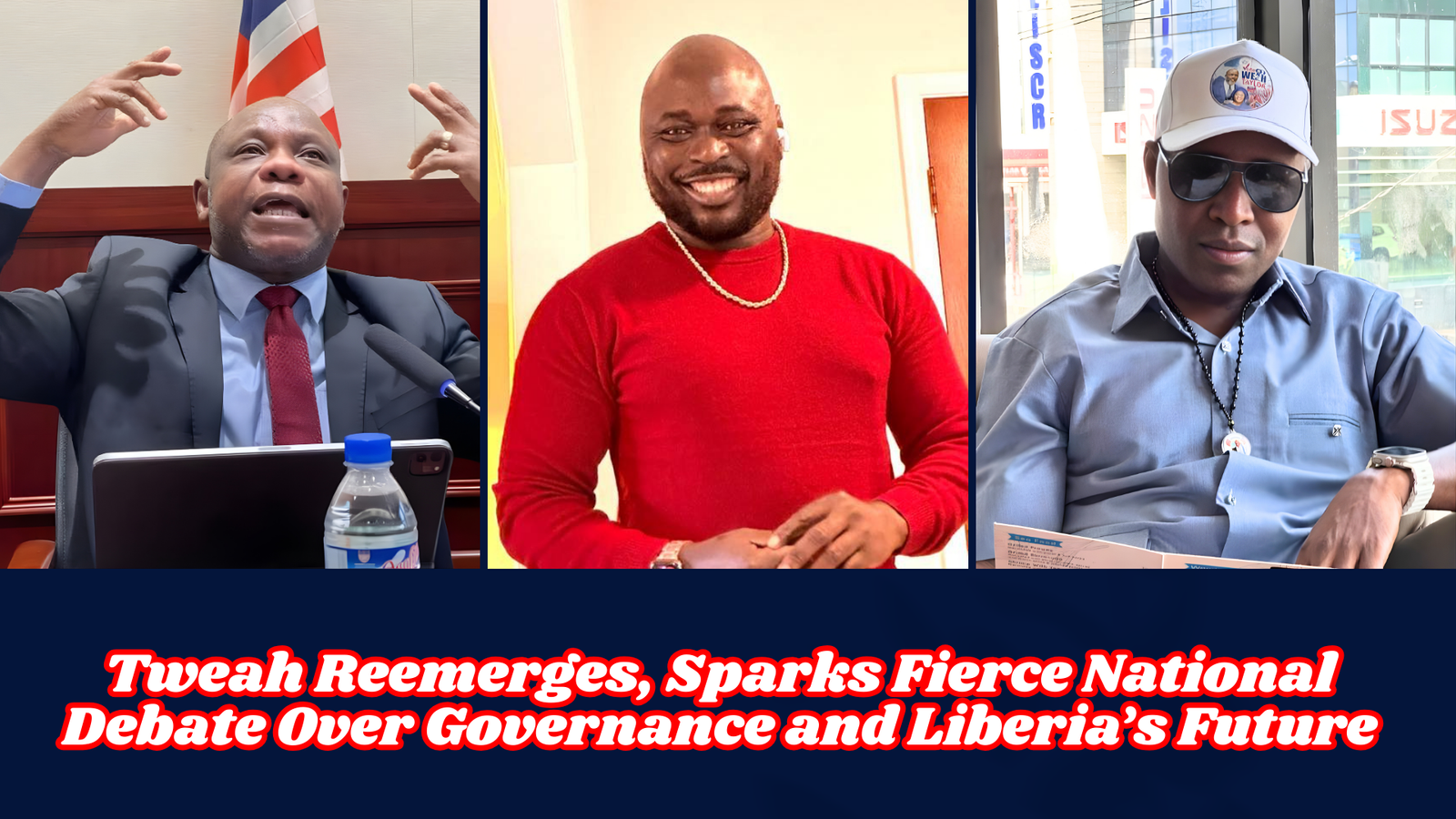
Liberia: Former Minister of Finance and Development Planning Samuel D. Tweah Jr. has broken his silence with a strongly worded Christmas message that has reignited national debate over governance, accountability, and the direction of Liberia under the current administration.
In a lengthy public statement, Tweah accused the ruling Unity Party of misleading Liberians with promises of a “golden age” following the 2023 elections, arguing that the country has instead experienced regression under what it calls the “Rescue Mission” government.
“Merry Christmas to our beloved Liberian people,” Tweah began. “Two years ago you believed the CDC’s eviction from political power would have ushered in a ‘golden age’ in Liberia you have never before seen. You were copiously hoodwinked.”
At the center of his criticism was the recurring issue of unpaid salaries, particularly at the University of Liberia. Citing a message from Instructor Eric Patten to journalist Julius Jeh, Tweah said university staff have gone without pay during the Christmas season for two consecutive years.
“For the second consecutive December since the ‘Rescue Mission’ assumed power, the UL has gone without pay for Christmas,” he wrote. “UL families have had to beg for Xmas for two straight years while their pay was held by the UP government.”
He contrasted the situation with the CDC era, highlighting the introduction of free tuition and salary adjustments for instructors.
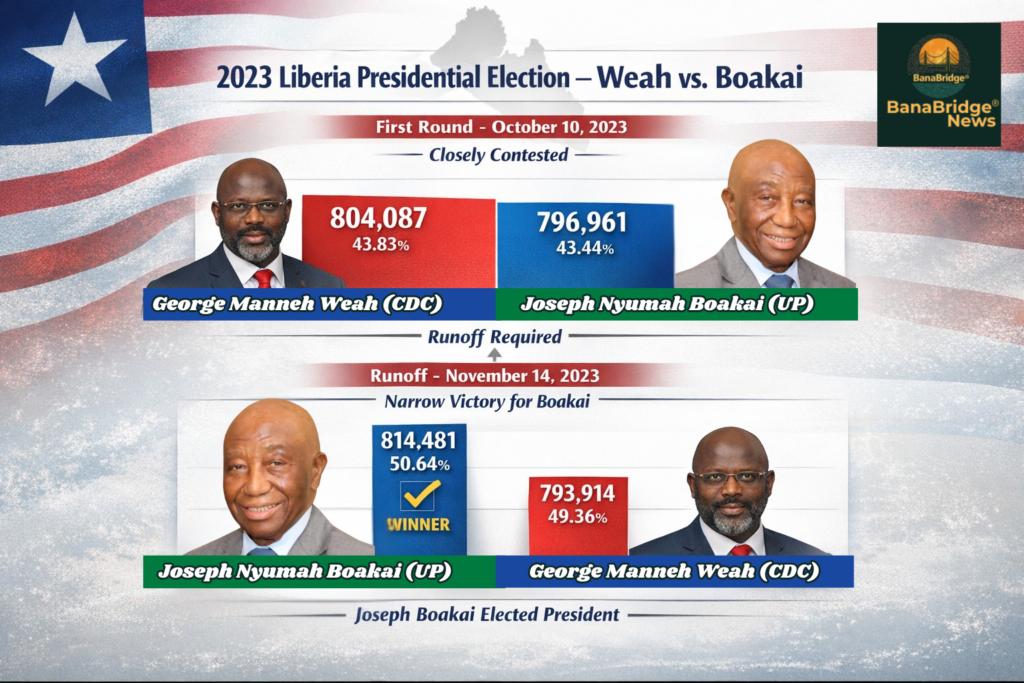
“Is this the same UL whose instructors’ salaries President Weah raised by more than 60 percent?” he asked. “Is this the same UL where President Weah launched free tuition, which today enables more than 10,000 Liberians to access higher education annually?”
Tweah argued that the dissatisfaction now being felt by educators mirrors the frustration that once fueled protests against the CDC. “Even public school teachers who are owed three months’ salary now get the drift,” he said. “They may not block the convoy of President Joseph Boakai as they did in 2019, but the message of regret and disappointment is loud and clear.”
He sharply criticized the government’s explanation that salary delays were caused by technical or systems challenges, calling it hypocritical. “These were the same explanations the Unity Party condemned when the CDC used them,” he said. “It feels like doublespeak. ‘LIE IS TRUTH. WAR IS PEACE. FREEDOM IS SLAVERY.’”
Defending the CDC’s economic record, Tweah rejected claims that his administration mismanaged the economy. “If the CDC had failed at governance, there would be no MCC Compact to speak of today,” he argued. “Despite macroeconomic turbulence and the onset of COVID-19, we delivered a macroeconomic miracle and placed Liberia on a sustainable growth path on which the ARREST Agenda now rests.”
He further accused the current administration of political persecution, describing a national security case against him as a tool of intimidation. “I have respected Liberia’s judicial system for more than a year,” he said, “but it is now clear that political manipulation is the regime’s preferred method.”
Tweah announced that he will appear on SpoonTalk on December 30 to respond publicly to critics and revisit what he called the “lies” surrounding his tenure. “I was mauled diabolically on Spoon, and I intend to return to correct the record about the governance and development achieved under President George Manneh Weah,” he said.
He ended his message with a direct political warning. “We will cover governance and politics without restraint, and I intend to show Liberians that they made a terrible mistake and are now reeling from it. We are ready for battle.”
His remarks sparked immediate reactions across the political spectrum.
Political commentator Patrick M’bayo pushed back strongly, accusing Tweah of distorting history. “This is not a clarification. It is a forceful correction of the record you are trying to distort,” M’bayo wrote. “We will not allow you to drag the public into another season of manufactured memory.”
M’bayo argued that salary delays and institutional instability at the University of Liberia were not new phenomena and occurred during the CDC administration as well. “In 2019, instructors went unpaid for months. Students protested. Faculty stopped teaching. These are facts, not opinions,” he stated.
He further criticized the free tuition policy, describing it as fiscally irresponsible. “Free tuition without funding is not reform. It is fiscal negligence,” M’bayo wrote, arguing that the policy placed long-term strain on the university system.
The debate widened further when former Deputy Minister for Planning, Research and Development Alton V. Kesselly entered the conversation in defense of Tweah. Kesselly accused critics of selective memory and intellectual dishonesty.
“The CDC administration did not end in 2019. It ended in 2024,” Kesselly wrote. “Judging an entire government by its early challenges while ignoring later progress is neither fair nor logical.”
He also addressed claims about the Millennium Challenge Corporation, noting that MCC assessments rely on multi-year data and cannot be politically rewritten. “The scorecards are based on lagging data drawn from global institutions. That reality cannot be altered to fit political narratives,” he said.
As the exchanges intensify, it is becoming increasingly clear that Liberia’s political contest is entering a new phase well ahead of the 2029 elections. What is unfolding is not merely a disagreement over policy, but a struggle over memory, responsibility, and public trust.
For ordinary Liberians, however, the issue remains painfully simple. Salaries must be paid. Schools must function. Public institutions must work.
As one civil servant frustratedly put it, “We are tired of explanations. We want stability.”
With political lines hardening and rhetoric escalating, the battle for Liberia’s future narrative has clearly begun long before the official campaign season. Many Liberians are now witnessing a stark opposite of Liberia’s govenance arena where the ruling Unity Party government is pushing “PROPAGANDA”, while the main opposition is pushing truth-telling and defending their records. Veteran investigative journalist and publisher of FrontPage Africa Newspaper, Rodney Sieh, alluded to same when he appeared on a local radio talk show in Monrovia.
Editor’s Note
The views expressed in this article reflect the intensifying national debate following recent public statements by former Finance Minister Samuel D. Tweah Jr. His comments, and the responses they have generated, speak to deeper questions about governance, accountability, and public trust in Liberia’s evolving political landscape.
BanaBridge News presents this report in the interest of balanced public discourse. The perspectives shared by all parties represent their individual positions and interpretations of events. Our role is not to endorse any political viewpoint but to provide readers with accurate context, verified statements, and a clear understanding of the issues shaping national conversation.
As Liberia moves toward the 2029 elections, political engagement is expected to grow sharper and more consequential. We encourage readers to critically assess all claims, seek diverse sources, and remain focused on the broader goals of national stability, transparency, and inclusive development.
BanaBridge News remains committed to responsible journalism that informs, challenges, and amplifies voices across the spectrum in service of the Liberian people.
About The Author