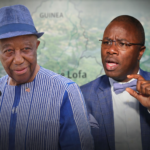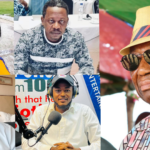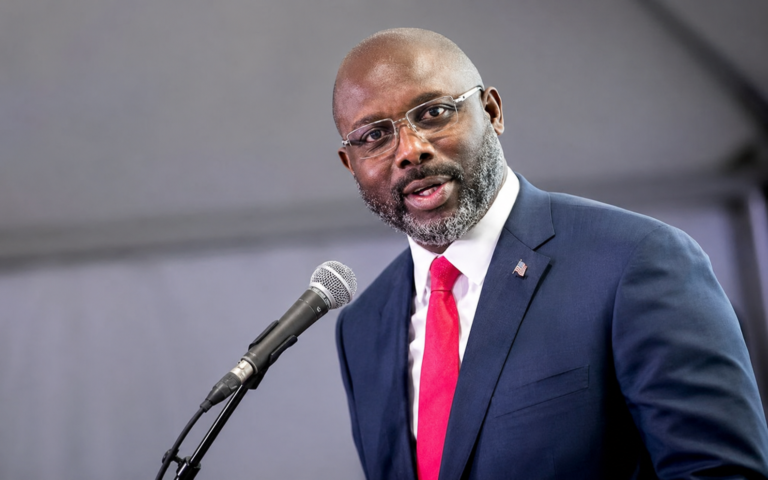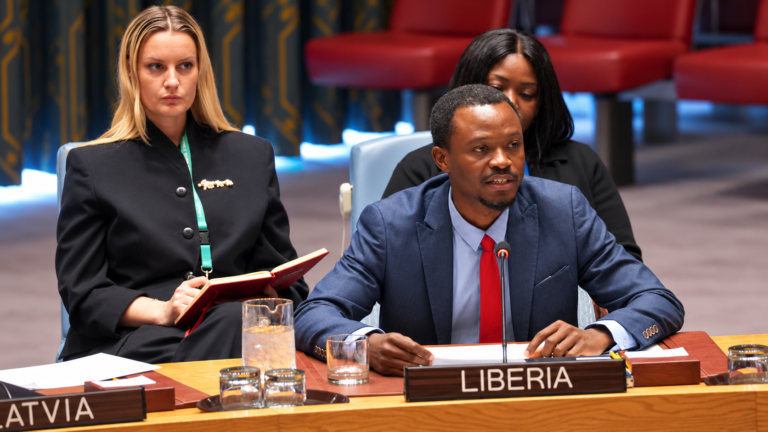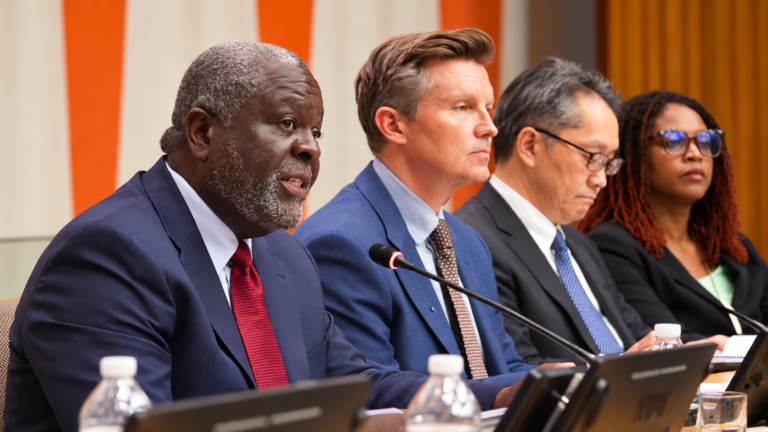

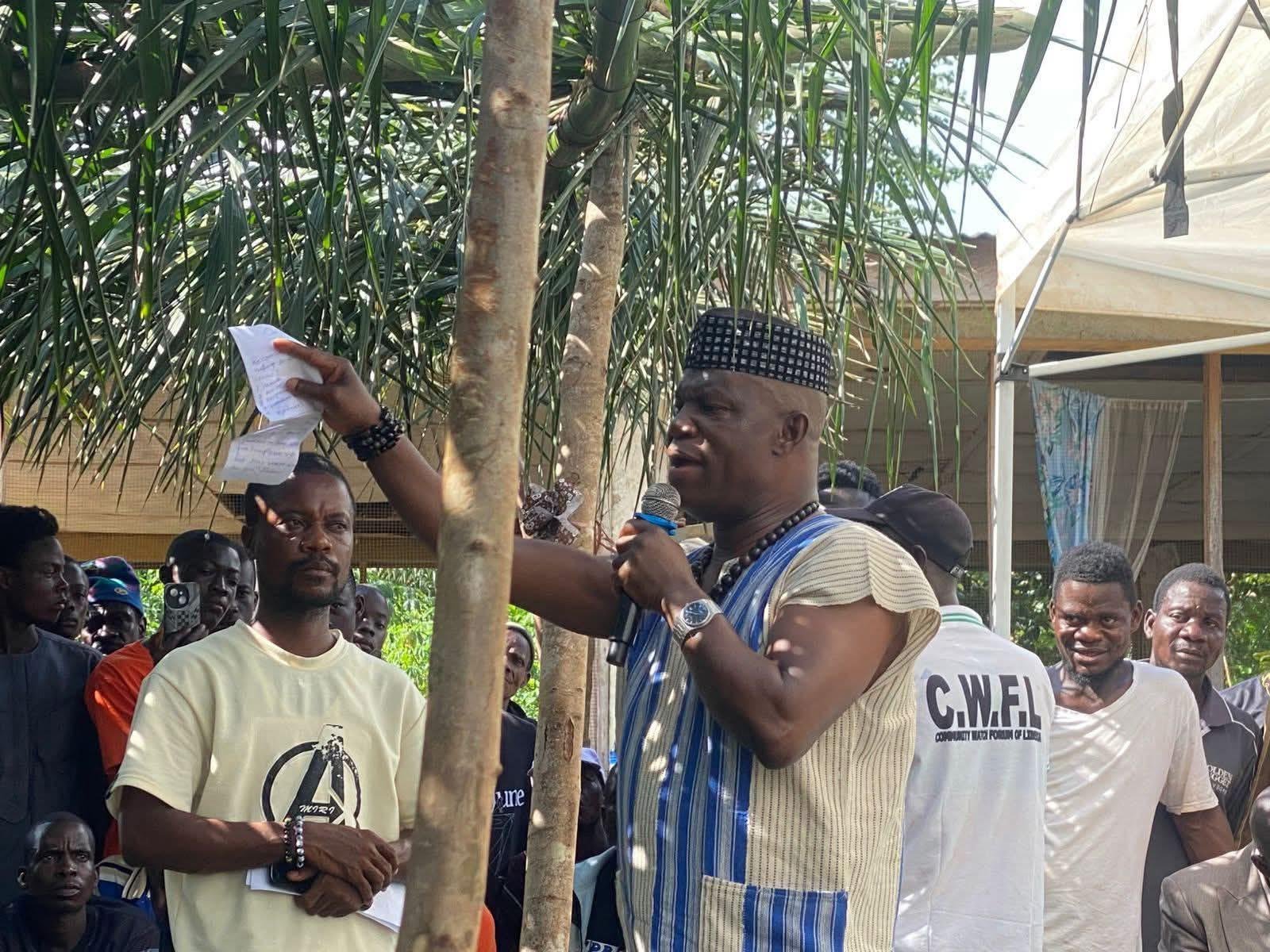
NIMBA COUNTY: Tensions are growing in Nimba County following the death of Senator Prince Y. Johnson, as Senator Samuel Kogar delivered a strong and direct speech that has exposed divisions between him, Vice President Jeremiah Koung, and the county’s traditional leadership.
Speaking to a gathering of supporters and community members, Senator Kogar criticized what he described as a troubling trend of linking national leaders too closely to their home regions. He took particular aim at those who refer to President Joseph Boakai as “Godfather of Lofa,” warning that such labels weaken the authority of the presidency.
“He is the President of the entire Republic of Liberia, not just Lofa County,” Kogar said. “When we use these kinds of labels, we reduce national leadership to a local image.”
Kogar Sends Clear Message to Vice President Koung
Senator Kogar also questioned the way some people frame Vice President Jeremiah Koung’s position, saying it is inappropriate to portray the Vice Presidency as a county-level role.
“No one has ever reduced a Vice President to the identity of their county,” Kogar said. “Vice President Koung occupies the second-highest office in our country. We must stop seeing him only through the lens of Nimba.”
Although he acknowledged their traditional “father and son” relationship, Kogar made it clear he is prepared to challenge Koung politically if necessary. “I respect Jeremiah Koung, but as a leader, I have to speak the truth. If he wants a confrontation, I am ready,” he said.
He also stressed that he would not compromise his principles to protect his position. “I will not remain silent to keep power. I have the right to express concerns directly to the President, who listens to me,” Kogar added.
Traditional Leaders Push Back
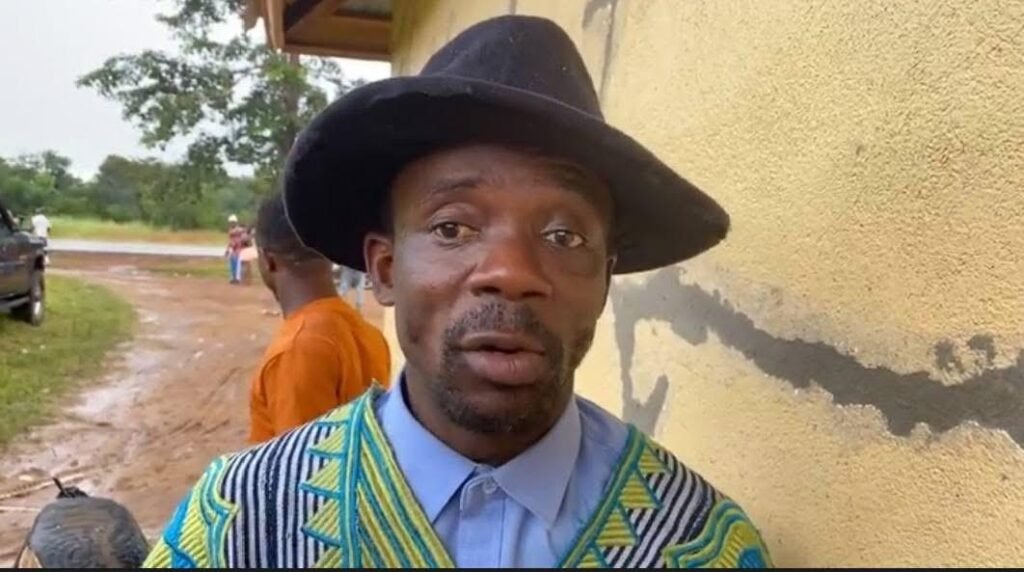
Kogar’s remarks drew a swift response from the Nimba Traditional Council. Melvin Gbelia Duo, the Council’s General Coordinator, expressed disappointment during an interview with Nimba TV after a peace event in the county.
“We supported Senator Kogar openly during his campaign. Our endorsement was made through traditional processes that everyone saw,” Duo said. “For him to now refer to us as ‘so-called elders’ seeking favors in Monrovia is hurtful.”
Duo reminded Kogar that the same elders he now criticizes played a key role in his rise to political prominence. “When we endorsed him, he praised us as leaders. Today, we are suddenly seen as favor seekers. That is unfair,” Duo said.
He also clarified that the Council does not see Kogar as the successor to Senator Prince Johnson’s informal leadership role in Nimba. “He was not installed to act as a new godfather of this county,” Duo stated.
A County at a Crossroads
The public disagreement highlights the growing division in Nimba County. For decades, the county’s political direction was shaped by Prince Johnson, whose influence stretched far beyond local politics. His death has left a leadership gap, and several power blocs are now competing to shape Nimba’s future.
Political observers say the tension between Kogar, Vice President Koung, and traditional leaders reflects a larger battle over political identity and influence in the county. With the 2026 elections approaching, these divisions could play a major role in determining the region’s political direction.
About The Author