

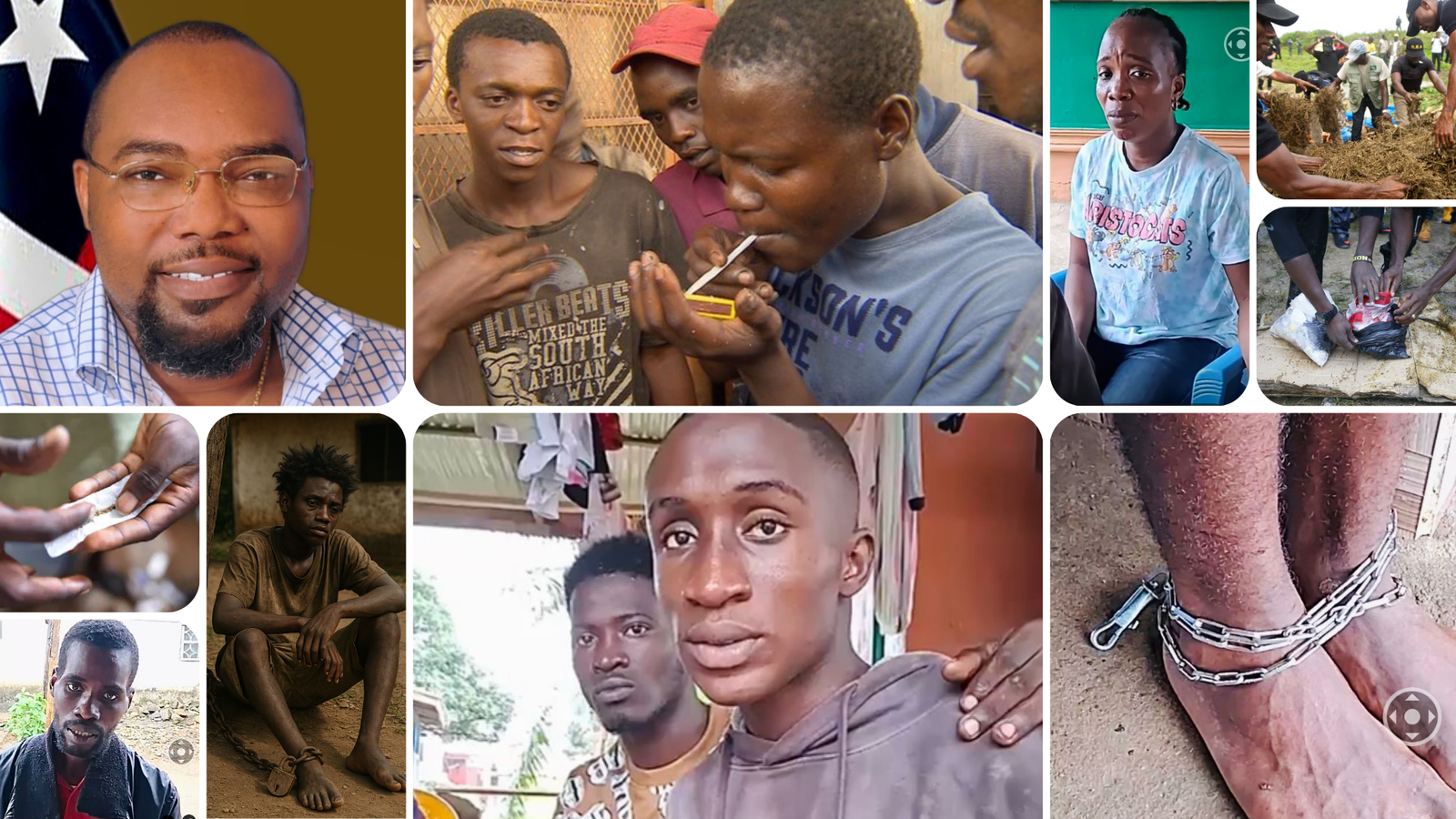
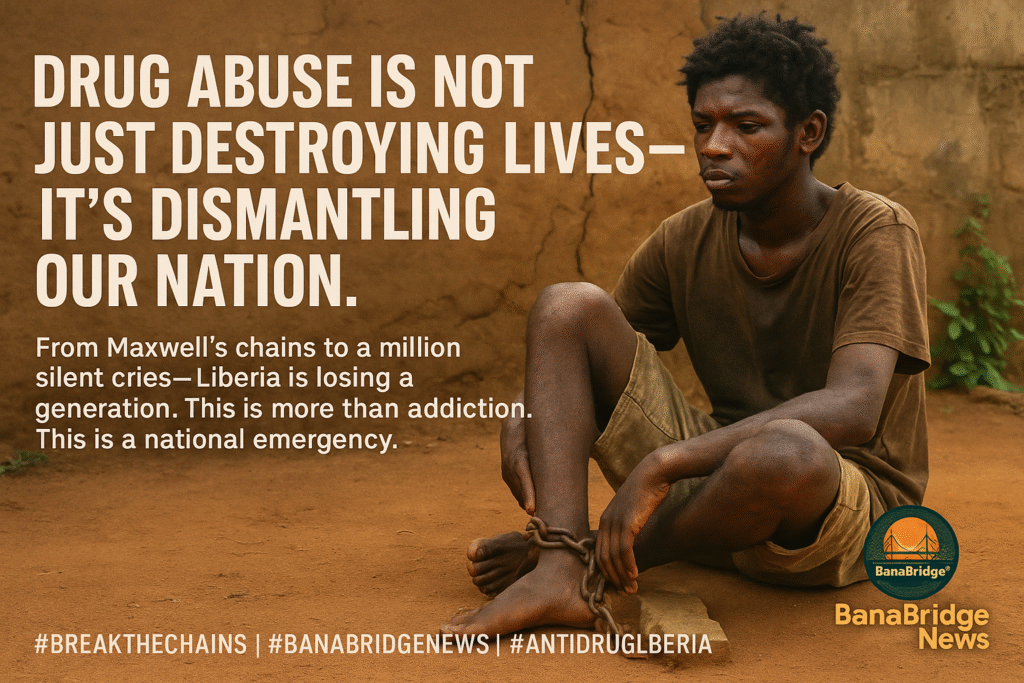
JOHNSONVILLE, LIBERIA – The only sound in the yard is the faint clink of a metal chain. It comes from a frail 19-year-old boy sitting under a mango tree, his eyes vacant, his legs bound by rusted iron. His name is Maxwell.
Once a promising student with a gift for technology, Maxwell now lives tethered to a post, reduced to silence and restraint; like many others across Liberia who have fallen into the abyss of drug addiction and been cast aside by a system that doesn’t know how; or simply refuses to care.
His mother, Gladys, a single parent of three, spoke tearfully on a recent episode of the Perspective Pro – Lib podcast, which BanaBridge News reviewed. Her voice cracked as she recalled the boy who once helped fix radios in the community, now shackled like an animal in their family yard.
“I don’t know what else to do,” she confessed. “He can’t walk. He doesn’t even speak sometimes. My son is still alive, but I’ve already lost him.”
From Promise to Despair
Maxwell’s downward spiral began, like so many others, with marijuana. It started innocently shared with his girlfriend after school, rolled casually during weekends. But soon, marijuana gave way to harder substances: kush, bloms, tramadol, koko-a toxic cocktail that ravaged his mind and body.
A friend, Stephen, who also struggled with drug use, admitted on the podcast that he had often smoked with Maxwell. But even he was shocked at how quickly things deteriorated.
“We all used drugs, but Maxwell’s mind just couldn’t take it,” Stephen said. “Now he’s not even himself. Something’s taken him.”
What took him; what is taking thousands of young Liberians, is a drug epidemic that has reached crisis levels.
A Nation on the Brink
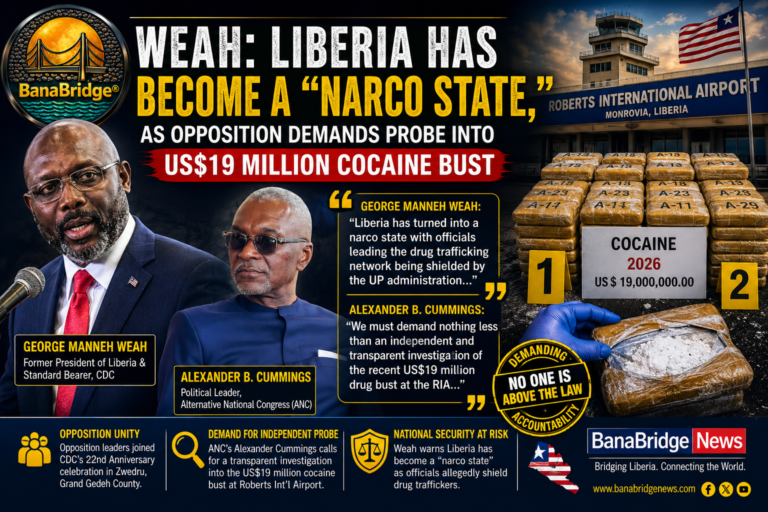
According to data from Liberia’s Drug Enforcement Agency (DEA), more than 1 million Liberians; about 20% of the population are now estimated to be using drugs, with the youth bearing the brunt of the crisis. The numbers are staggering. The DEA reports three to five drug-related deaths daily across the country. And if current trends continue, officials warn, the rate of addiction among young people could climb to 42% within a few years.
Yet despite these alarming statistics, Liberia’s national response remains disturbingly lethargic. A National Drug Master Plan exists but it sits idle in legislative committees. A proposed simplified version of the drug law meant for public awareness has been completely ignored. And an initial $1.4 million allocated to anti-drug efforts across three agencies was removed during the latest budget recast.
“We are watching an entire generation disappear, and we’re barely reacting,” said Grand Bassa District #4 Representative Thomas Goshua, one of the few lawmakers vocally advocating for real action.
Goshua has repeatedly criticized the government’s inaction, drawing comparisons to Sierra Leone, where firm policy, funding, and community mobilization have helped turn the tide. Liberia, he warns, is lagging dangerously behind.
The Chains of Stigma and Neglect
What’s most haunting about Maxwell’s story is not just the addiction it’s the way society has chosen to handle it. Lacking proper mental health facilities, support systems, or rehabilitation centers, many Liberian families do the only thing they believe they can: they chain their children.
In yards. In abandoned rooms. Behind homes.
Not out of cruelty, but desperation.
Maxwell, now mentally unstable, is no longer taken to clinics. His mother cannot afford consistent treatment. Instead, he is kept restrained; day after day, so he doesn’t wander or hurt himself. It is a reality repeated across urban slums and rural towns in Liberia, where chains have become a crude substitute for mental healthcare.
“I know it’s not right,” Gladys whispered on the podcast, “but I’m afraid of what might happen if I unchain him.”
A Protest Builds Momentum
In response to rising public frustration, a national protest against drug abuse is being mobilized. Youth leaders, mothers, clergy, and civil society groups are rallying to demand immediate government action.
Their demands include:
- Emergency funding for rehabilitation centers
- A national drug awareness campaign
- Stronger border and customs enforcement
- Legal reform to support families, not criminalize victims
Maxwell Is Still Here
Maxwell remains under the mango tree. Some days he speaks. Some days he just stares. On most days, he doesn’t remember what came before the chains.
But his story is not over. It is a call. A warning. A reflection of what happens when a nation allows silence, shame, and neglect to bury its future.
Gladys still hopes.
“If I see one sign that he’s coming back to me, I’ll do anything. I’ll walk to the President’s house myself if I have to.”
The Chain Reaction
Liberia is at a crossroads. Either the nation rises to face its greatest internal crisis; or it will continue to bury its youth, one link at a time.
Maxwell is not just a victim. He is a mirror. And behind him, a thousand more are waiting.
Waiting for help.
Waiting for healing.
Waiting for the chains to come off.
About the Author