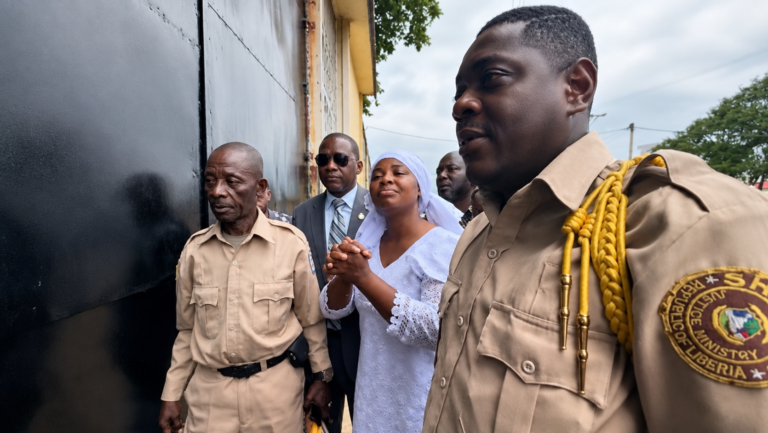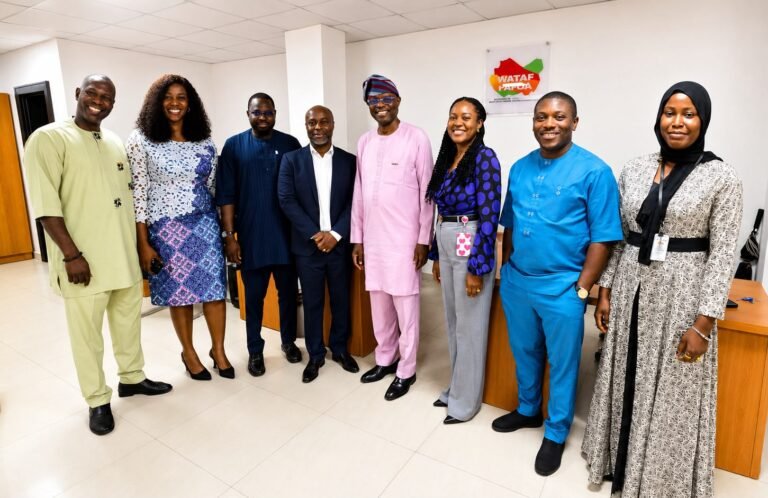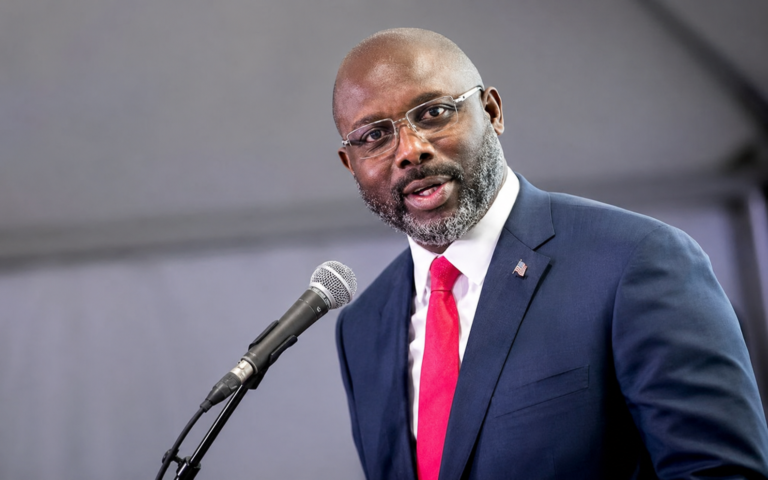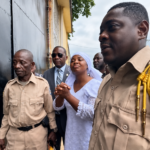

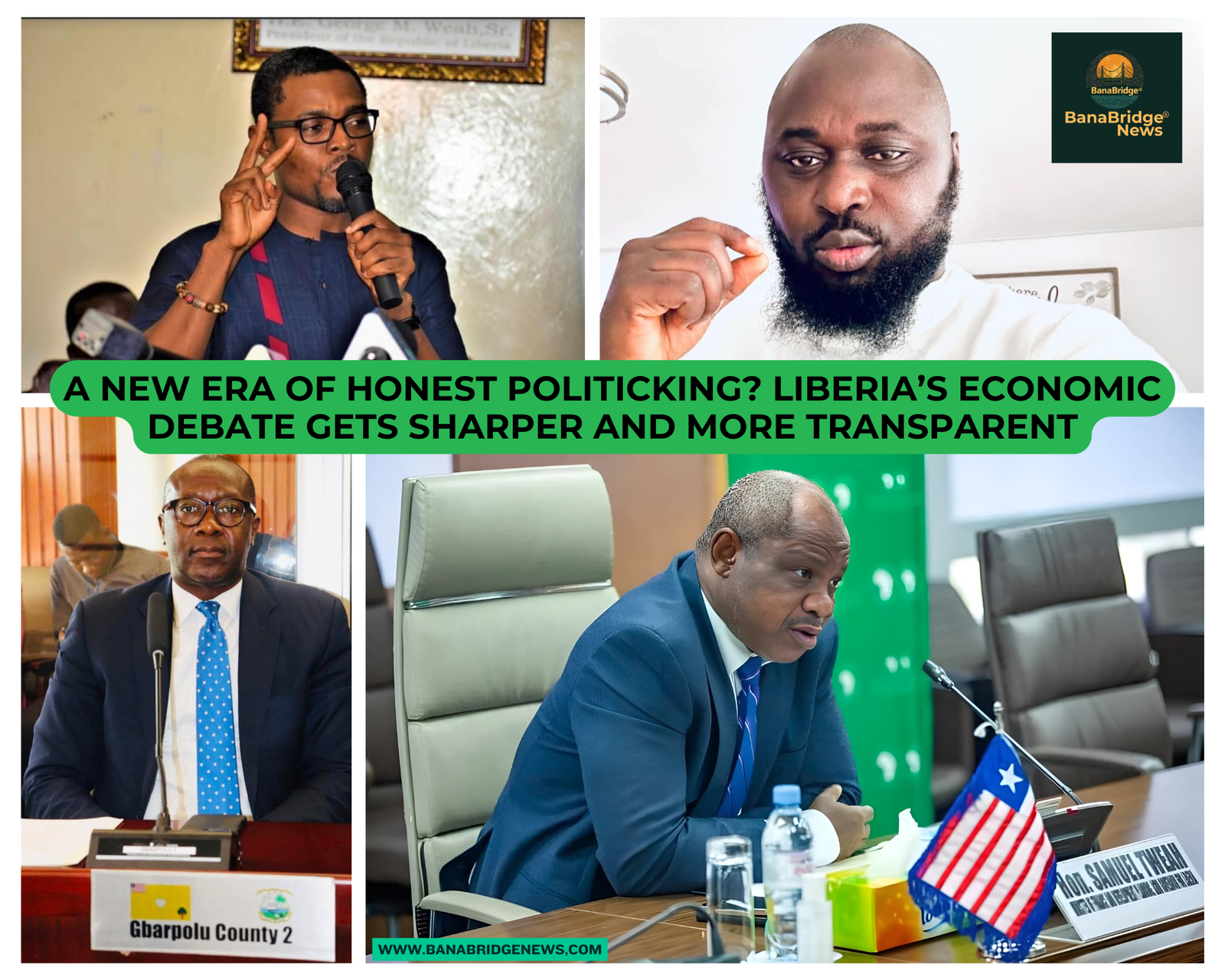
Top: Del Francis Wreh and Patrick M'bayo Bottom: Sen. Amara Konneh and Min. Samuel Tweah
As leading economists and politicians discuss the country’s economic situation, both past and present, with unusual candor, a wave of what many are referring to as “honest politicking” is sweeping through Liberia’s political landscape. Senator Amara Konneh and former Finance Minister Samuel D. Tweah Jr. had a polite exchange, but it has since expanded into a more in-depth national discussion with new participants like economist Patrick M’bayo and Del-Francis Wreh, the former Executive Director of the Macroeconomic Policy Analysis Center.
The Original Exchange: Praise Meets Prudence
In a rare show of bipartisan respect, Samuel Tweah thanked Senator Konneh for bringing attention to the macroeconomic recovery that Liberia had in 2023 under the now-opposition CDC-led government. He lauded Konneh’s candor and called for more data-driven political discourse.
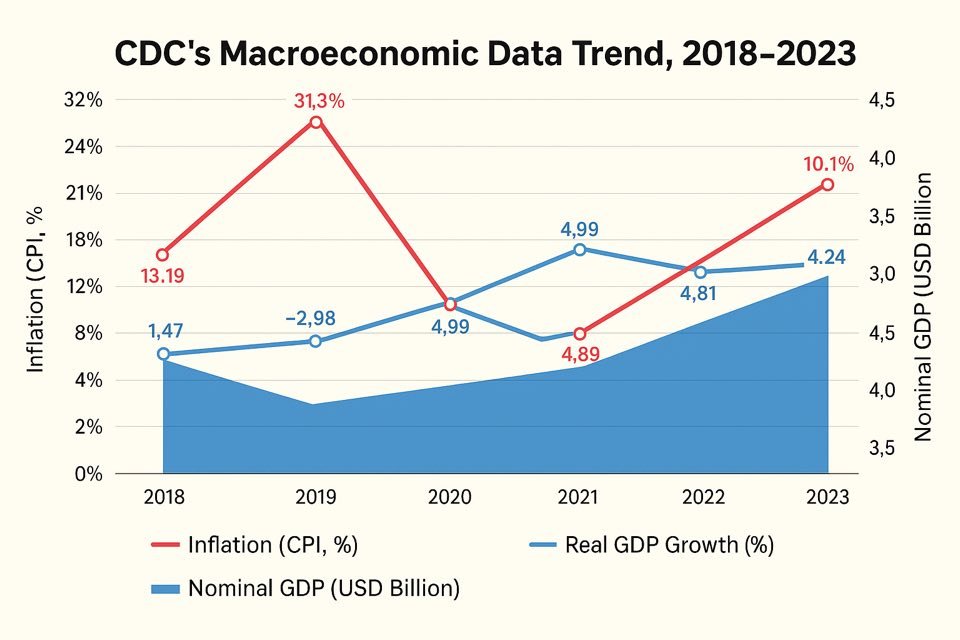
“It is an unassailable fact that the CDC administration handed the UP administration a solid macroeconomic foundation,” Tweah stated. Citing inflation data from LISGIS, he argued that average prices have risen by 12.48% under the Unity Party, asserting the need for the current administration to adopt or improve upon CDC-era macroeconomic strategies.
Konneh, however, maintained a more nuanced stance. While acknowledging the recovery in 2022–2023, he insisted that economic growth did not translate into real improvements for ordinary Liberians. “You can’t intellectualize hardship,” he wrote, emphasizing rising unemployment, affordability challenges, and a growth rate too sluggish to absorb the country’s expanding labor force.
Enter M’bayo: “You Can’t Whitewash Six Years of Failure”
But former Ministry of Finance advisor and economist Patrick D. M’bayo wasn’t convinced by the CDC’s economic self-defense or Senator Konneh’s acknowledgment of “stability” in 2023. In a blistering Facebook post, M’bayo accused Konneh of trying to “whitewash the CDC’s six years of macroeconomic failure.”
“A single year of modest growth and slightly lower inflation does not reverse the damage done between 2018 and 2023,” M’bayo wrote. He pointed to World Bank data showing that growth fell from 1.2% in 2017 to –2.5% by 2019. Inflation, he argued, surged past 27% in 2020, while wages stagnated, public investment declined, and debt ballooned.
“Under George Weah’s CDC government, Liberia’s debt-to-GDP ratio increased by more than 20 percentage points,” he noted. “Despite this borrowing, public service delivery got worse.”
M’bayo also criticized the CDC for failing to maintain infrastructure, mismanaging procurement, and undermining social services. He accused the administration of running a “reactive” monetary policy and prioritizing political survival over development.
Del-Francis Wreh Challenges M’bayo’s Framing
In the midst of this exchange, Del-Francis Wreh, former Executive Director of the Macroeconomic Policy Analysis Center and now Senior Managing Partner at 231 Analytics & Research Inc., publicly challenged M’bayo for omitting the 2016–2017 growth baseline in his economic critique.
“Why did you intentionally leave out the growth rate of 2016 and 2017; the base CDC inherited?” Wreh asked in a Facebook thread.
M’bayo responded by stating his focus was the CDC’s governance from 2018 onward. But Wreh pushed back:
“In statistical economic analyses, the base cannot be ignored… Unless you have a motive and want to be biased, so you have intentionally ignored it.”
This sharp exchange revealed a core principle in economic analysis: context is critical. Omitting baseline data distorts the full picture, and honest politicking demands full transparency—not selective memory.
Honest Politicking or Strategic Rebranding?
This evolving conversation may signal a shift in how Liberian politicians engage on critical issues. Rather than the usual denialism or propaganda, the current discourse has included data-backed arguments, acknowledgment of hard truths, and appeals for sober policy reflection.
“This is one of the most constructive political conversations Liberia has seen in years,” says Fatima Sesay, a West African development economist and contributor to EcoPol Monitor. “But let’s be clear: honesty must include full transparency. You can’t cherry-pick data just to make a political point—even if it feels right emotionally.”
Konneh’s call for realism remains important: “The voters won’t wait 13 years for the economy to double,” he said, warning that rising prices and unemployment could erode public confidence even in a reform-minded administration.
Toward a Data-Driven Democracy
In a country often plagued by sensationalism, emotionalism, and selective memory, the emergence of what Tweah calls “honest politicking” could be a turning point. But this new culture will only thrive if all actors: politicians, analysts, and the media are willing to engage in the full truth, including context, causality, and consequences.
As the debates continue, one thing is clear: Liberia’s path forward requires more than numbers. It demands courage, humility, and accountability.
About the Author