

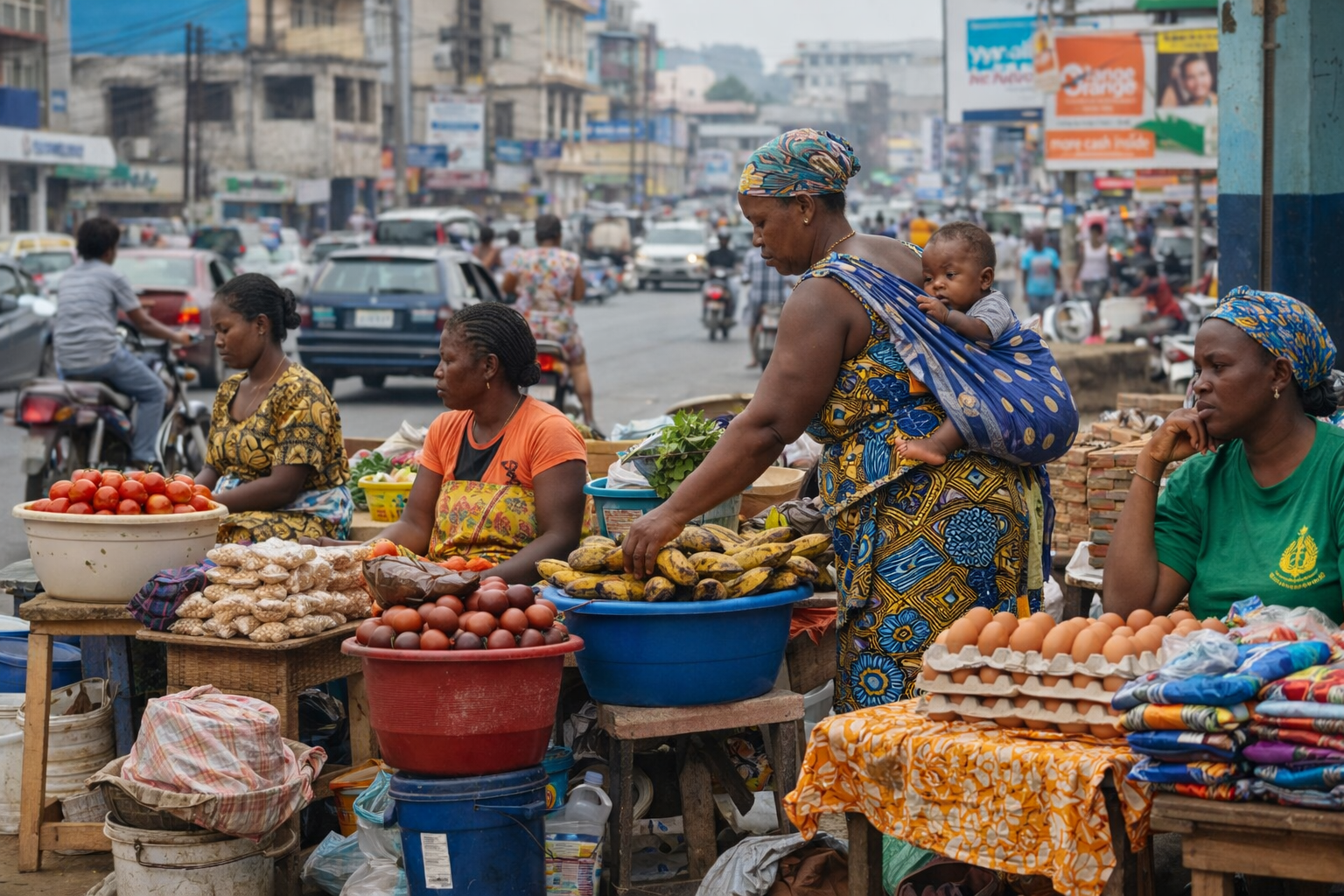
Monrovia, Liberia: A new World Bank assessment tracking legal barriers and implementation gaps in women’s economic rights reveals that Liberia has taken important steps in establishing gender-equal statutes, but the real test lies in enforcement and support systems that remain far behind, according to the Women, Business and the Law data.
The international Women, Business and the Law project benchmarks how laws, policies, and enforcement shape women’s ability to work, start businesses, access credit, and participate fully in economies across 190 economies. Liberia’s country snapshot offers a mixed picture of legal intent and practical outcomes.
Legal Frameworks Score Above Support, But Enforcement Lags
Liberia’s legal framework for women’s economic rights, which measures whether statutes eliminate discrimination and guarantee economic opportunity, scored 59 out of 100 on the World Bank’s index scale. This places Liberia in a position where formal equality exists on paper in many areas, from workplace rights to entrepreneurship protections.
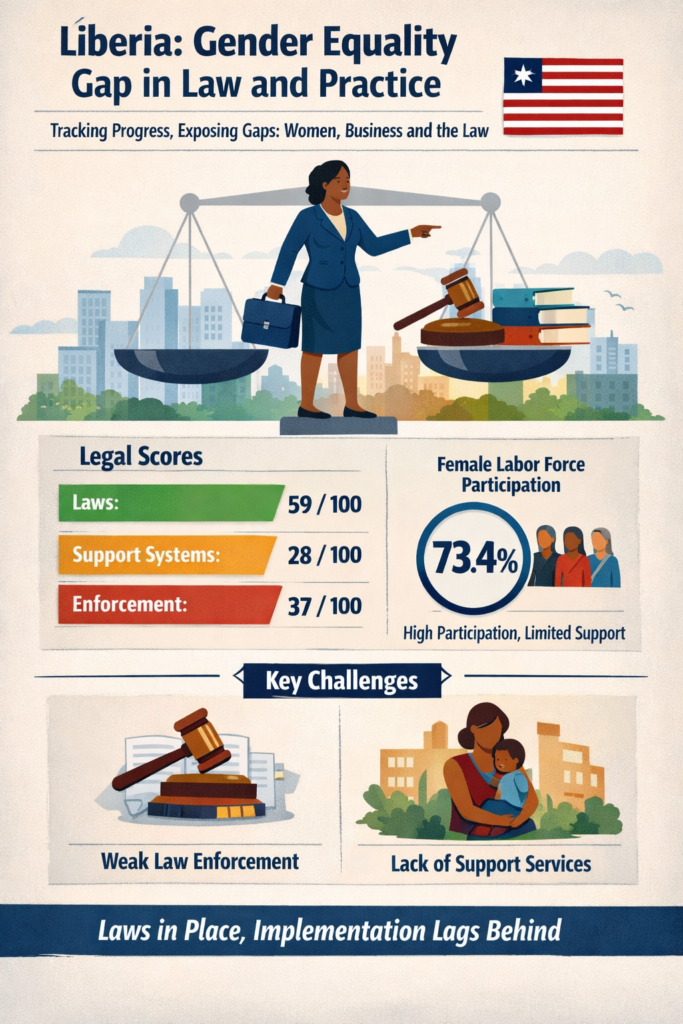
However, that statutory progress isn’t translating into concrete support systems or real outcomes:
- Supportive frameworks, such as institutional mechanisms, budgetary allocations, services, and systems needed to implement gender-equal laws, scored only 28.
- Enforcement perceptions experts’ assessments of how well laws are actually enforced in practice, landed at a low 37, suggesting that many rights remain aspirational rather than lived realities for Liberian women.
This gap echoes broader global themes identified in the latest World Bank reporting, where legal equality often outpaces the systems needed to make those rights effective on the ground.
Women’s Participation Strong, But Systemic Barriers Persist
Despite policy shortcomings, Liberian women’s economic participation metrics show resilience: female labor force participation stands at around 73.4%, a relatively high share compared with global norms.
Still, the Women, Business and the Law dataset underscores that high participation alone does not guarantee equality in economic opportunity or outcomes. Without enforcement mechanisms and supportive institutional frameworks; such as accessible childcare, protections against workplace discrimination, legal services, and financial access; women face hidden barriers that laws alone cannot dismantle.
Reforms on the Books, Implementation in Question
Liberia’s scores suggest that policymakers have acted to align laws with international standards on gender equality. Yet the profound discrepancy between those laws and how they play out in the real economy calls for urgent policy focus on implementation, accountability, and support structures, areas that historically attract less attention than formal statute reform.
Experts argue that bridging this “law-to-practice” gap is critical for inclusivity and economic growth. Global data from the World Bank show that narrowing legal and institutional gender gaps can expand labor markets and entrepreneurial dynamism, outcomes essential for Liberia’s broader development goals.
Policy Implications: From Legal Reform to Systems Change
Liberia’s Women, Business and the Law snapshot highlights that while removing discriminatory laws is necessary, it is far from sufficient. Strengthening enforcement perceptions and supportive frameworks will likely require:
- Investment in legal and judicial services that can uphold women’s rights in practice.
- Policy designs that prioritize childcare, workplace protections, and access to finance.
- Data systems to track enforcement and outcomes, not just statutes.
As the World Bank project continues to refine its benchmarking, including new indicators such as safety and childcare, Liberia’s performance on these expanded fronts will offer deeper insights into where the nation stands and what next steps could have the greatest impact on women’s economic empowerment.
About the Author