
Liberians are less likely to describe corruption as being at a “high” level than they were a year ago, but an overwhelming majority still believe graft remains a serious national problem, according to the 2025 State of Corruption Report released Tuesday by the Center for Transparency and Accountability in Liberia (CENTAL).
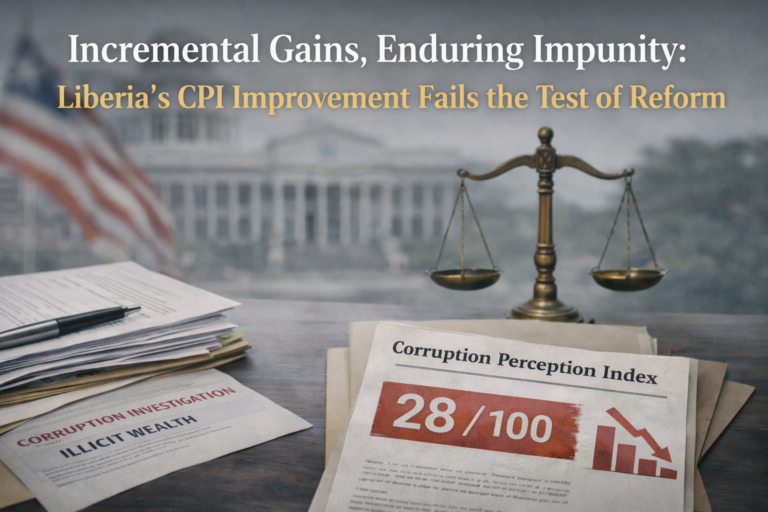
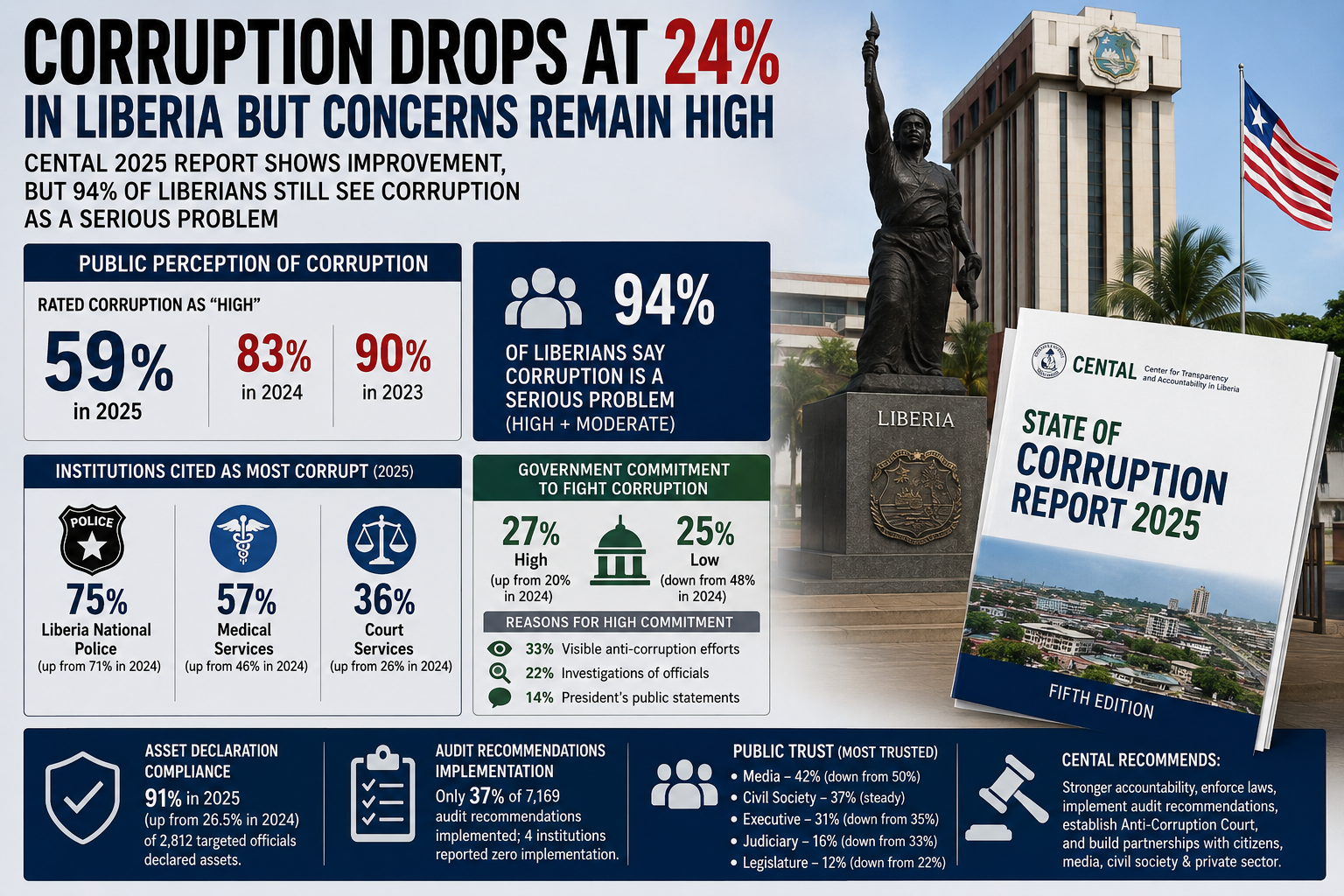
The report found that 59% of respondents rated corruption as “high” in 2025, down sharply from 83% in 2024 and 90% in 2023. Despite the decline, 94% of those surveyed still classified corruption as either “high” or “moderate,” suggesting that public concern remains widespread.
CENTAL described the decline in the “high” category as a positive development but cautioned that the shift largely reflects respondents moving their assessment from “high” to “moderate” rather than believing corruption has been significantly reduced.
“The findings point to relative progress but also highlight persistent challenges, particularly impunity,” the organization said.
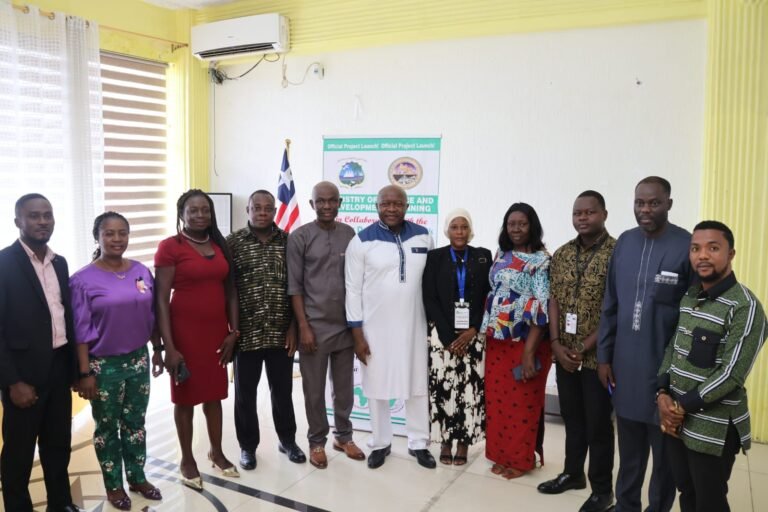
The report, launched in Monrovia on July 8, is the fifth edition of CENTAL’s annual assessment of corruption trends. Funded by the Embassy of Sweden through the National Integrity Building and Anti-Corruption Program, it surveyed 772 respondents across nine counties between January and December 2025. Researchers also relied on media monitoring, key informant interviews and desk reviews.
Public perception of corruption remained highest within the Liberia National Police, where 75% of respondents described the institution as corrupt, up from 71% a year earlier.
Concerns also increased in the health sector, with 57% identifying corruption in medical services compared with 46% in 2024, while perceptions of corruption in the courts rose to 36% from 26%.
CENTAL said corruption in essential public services continues to undermine citizens’ rights and contributes to poverty.
The survey also recorded improved public confidence in the government’s commitment to fighting corruption.
About 27% of respondents rated the government’s commitment as high, up from 20% in 2024, while those rating it low fell from 48% to 25%.
Among respondents who viewed the government’s commitment positively, 33% cited visible anti-corruption efforts, 22% pointed to investigations involving public officials, and 14% credited President Joseph Boakai’s public statements condemning corruption.
Trust in public institutions, however, generally declined.
The media remained Liberia’s most trusted institution, although confidence fell to 42% from 50% a year earlier. Trust in civil society organizations remained relatively stable at 37%, while confidence in religious institutions dropped from 53% to 33%.
Within government, confidence in the Executive declined to 31% from 35%, while trust in the Judiciary fell sharply to 16% from 33%. The Legislature remained the least trusted branch of government, dropping from 22% to 12%.
The report highlighted what it described as a milestone after the Legislature subjected itself to a system audit for the first time since Liberia’s civil war. The General Auditing Commission began the audit in October 2025 and expanded its oversight to 62 public institutions.
Implementation of audit recommendations, however, remains weak. Of 7,169 recommendations issued, only 37% had been implemented, while four institutions reported no implementation at all.
The report also noted significant progress in asset declaration compliance.
According to the Liberia Anti-Corruption Commission (LACC), 91% of 2,812 targeted public officials filed asset declarations in 2025, compared with 26.5% the previous year.
CENTAL said stronger verification mechanisms and greater accountability for officials who fail to comply are still needed.
The organization called for broader reforms, including stronger judicial and legislative accountability, enforcement of the Code of Conduct and asset declaration laws, implementation of audit recommendations, establishment of a National Anti-Corruption Court, and closer collaboration among government institutions, civil society, the media and the private sector.
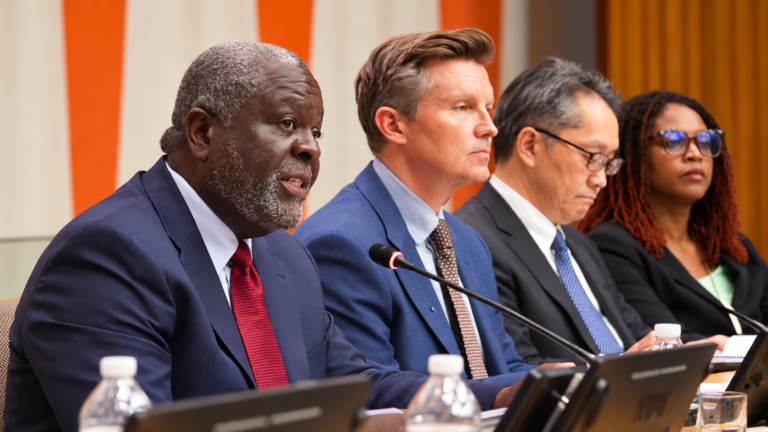
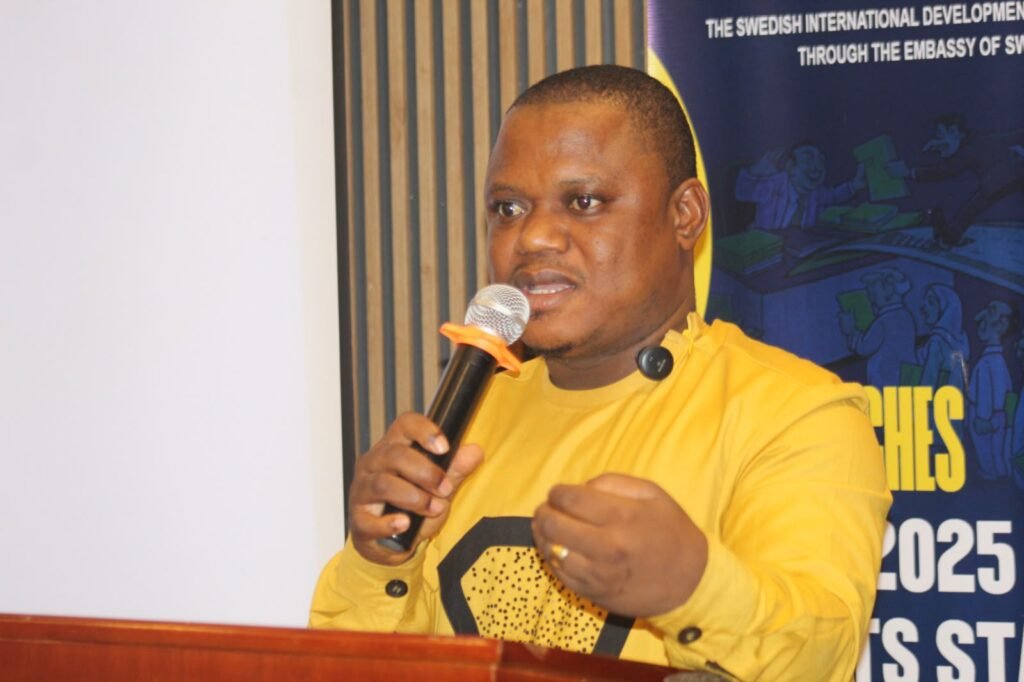
Speaking at the report’s launch, Liberia Anti-Corruption Commission Chairperson Cllr. Alexandra K. Zoe welcomed the findings, saying they reflected both progress and continuing challenges.
“While we have made gains, the fight against corruption is far from over,” Zoe said. “It remains a national responsibility that requires consistent effort from all of us.”
She said the report recognizes improvements in legislation, public awareness and institutional cooperation while underscoring the need for sustained enforcement, impartial investigations, public education and effective prosecution of corruption cases.
Zoe also commended the continued collaboration among the LACC, CENTAL, the Ministry of Justice, the General Auditing Commission, the Financial Intelligence Agency and international development partners in strengthening Liberia’s integrity system.
CENTAL thanked the Embassy of Sweden for funding the study, noting that the findings represent the organization’s independent assessment and not the official views of the Swedish government. With Sweden’s current support program nearing completion, CENTAL said it is seeking new funding partners to continue publishing the annual report.
About The Author