


A rare pygmy hippopotamus surfaces in Sapo National Park, Liberia, its mouth wide open amid the park’s lush, reflective waters.
Monrovia, Liberia – Liberia’s top environmental official has issued a strong rebuttal to a lawmaker’s proposal to strip Sapo National Park (SNP) of its protected status, warning that such a move would inflict irreversible harm on the nation’s biodiversity, climate resilience, and long-term economic potential.
In a detailed statement on Monday, Dr. Emmanuel K. Urey Yarkpawolo, Executive Director of the Environmental Protection Agency (EPA), pushed back against District #2 Representative Thomas Romeo Quiah’s suggestion to degazette the country’s largest national park, located in Sinoe County.
“As the country’s largest protected area and one of the most intact tropical rainforests in the world, Sapo is a cornerstone of Liberia’s environmental, cultural, and economic future,” Dr. Yarkpawolo said. “Removing it from our protected network would be a permanent loss.”

A Critical Ecological Treasure
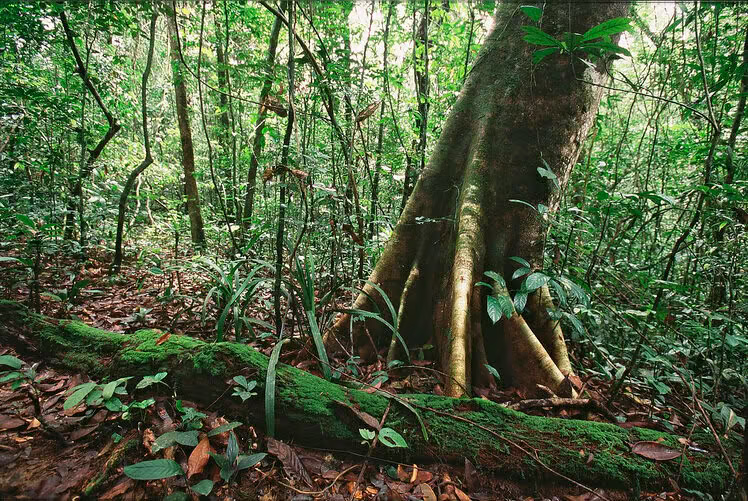
Established in 1983, Sapo National Park spans over 180,000 hectares and serves as a refuge for a stunning array of species, including elephants, chimpanzees, leopards, pygmy hippos, and endangered tortoises. It harbors 125 mammal species, more than 200 bird species, 350 butterfly species, and over 500 types of vascular plants; many of them found nowhere else.
“This park is a regional center of endemism,” Dr. Yarkpawolo noted, “and plays a vital role in stabilizing wildlife populations that surrounding communities depend on.”
Economic and Climate Value
The park is a linchpin in Liberia’s potential to benefit from the global carbon market. Sinoe County alone, where most of SNP lies, is estimated to store up to 29 million tons of carbon; worth roughly $48 million at conservative market prices.
With climate talks set for COP30 in Brazil this November, Dr. Yarkpawolo argued that keeping Sapo intact strengthens Liberia’s position alongside other forest nations like Brazil and the Democratic Republic of Congo in demanding greater financial recognition for preserving “standing forests” that combat global warming.
“Every dollar invested in a protected area can yield six dollars in economic benefit,” he said, citing studies that show communities adjacent to well-managed forests enjoy greater resilience and diversified incomes.
Legal and International Commitments
Degazetting the park, the EPA warns, would violate Liberia’s own Environmental Protection and Management Law, the National Wildlife Conservation and Protected Area Management Law, and the Forest Reform Law.
It would also undermine Liberia’s commitments under the Paris Climate Agreement, the Convention on Biological Diversity, and the country’s own biodiversity action plan. “Such a step would weaken our standing in the international community,” Yarkpawolo said.
Risks of Degazettement
The EPA chief cautioned that removing the park’s protected status would open the door to “unregulated exploitation,” echoing past cases where logging and mining concessions promised development but delivered environmental degradation and community disempowerment.
Experience from community forests bordering SNP shows that once forests are opened for industrial use, “local people are often displaced or marginalized, while short-term profits flow to outside actors,” he said.
A Call for Reform, Not Removal
Rather than dismantle protections, the EPA is urging reforms to improve park governance, increase community benefits, and expand sustainable livelihoods. Recommendations include:
- Increased funding for park operations and security.
- Global fundraising to leverage Sapo’s ecological value for community development.
- Greater community involvement in management decisions.
- Carbon credit development to finance both conservation and local projects.
- Negotiation over boundary disputes dating to the 2003 park expansion.
Balancing Conservation and Community Needs
Dr. Yarkpawolo acknowledged that economic opportunities for local residents remain limited, but stressed that the solution is to unlock the park’s full potential; through eco-tourism, sustainable enterprise, and carbon financing, rather than sacrificing it for short-term gain.
“Degazettement would erase future opportunities for these communities and the country,” he said. “Instead of tearing down our environmental assets, we should rally investment, reform policy, and embrace inclusive governance to ensure Sapo National Park benefits both people and nature for generations to come.”
About the Author