
NEW YORK | October 8, 2026 | BanaBridge News
Liberia has called for significant changes to how United Nations peace operations are designed, managed and concluded, arguing that sustainable peace requires more than the deployment of international troops and the consent of national governments.
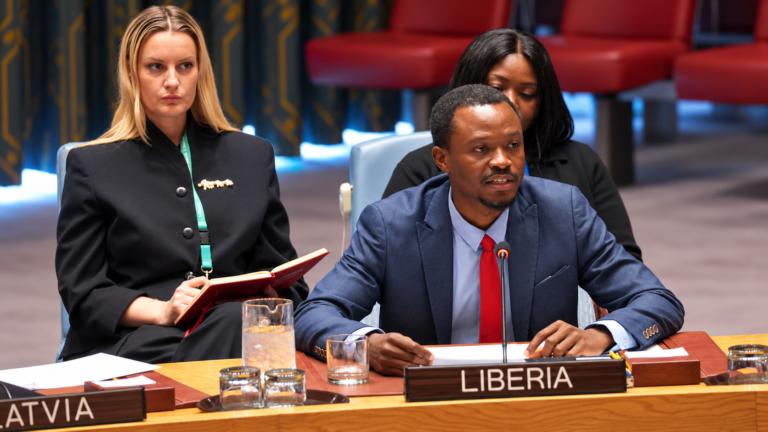
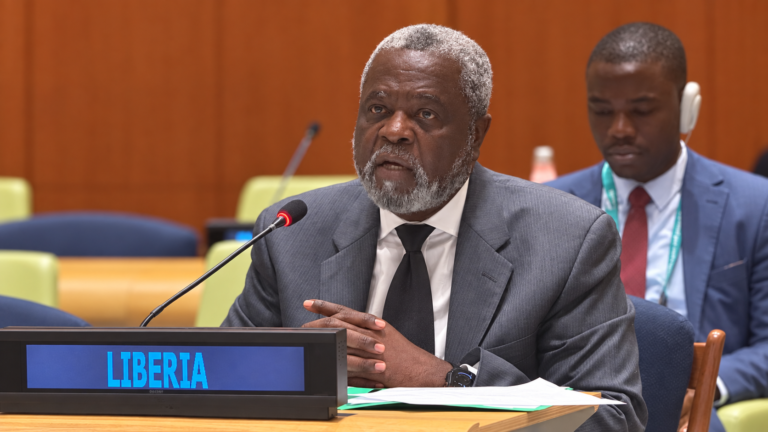
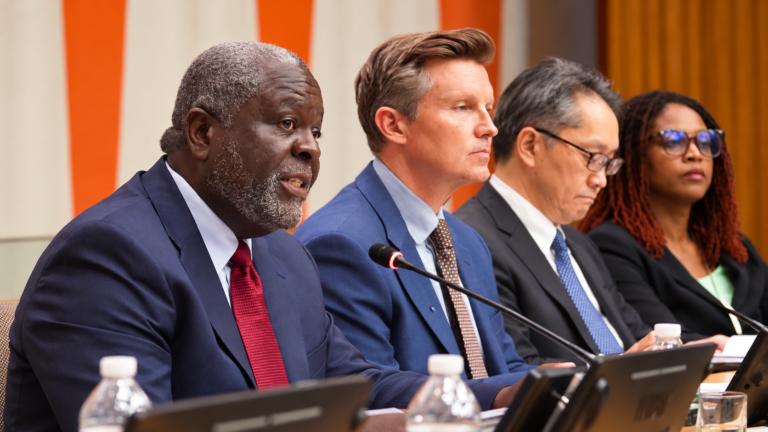
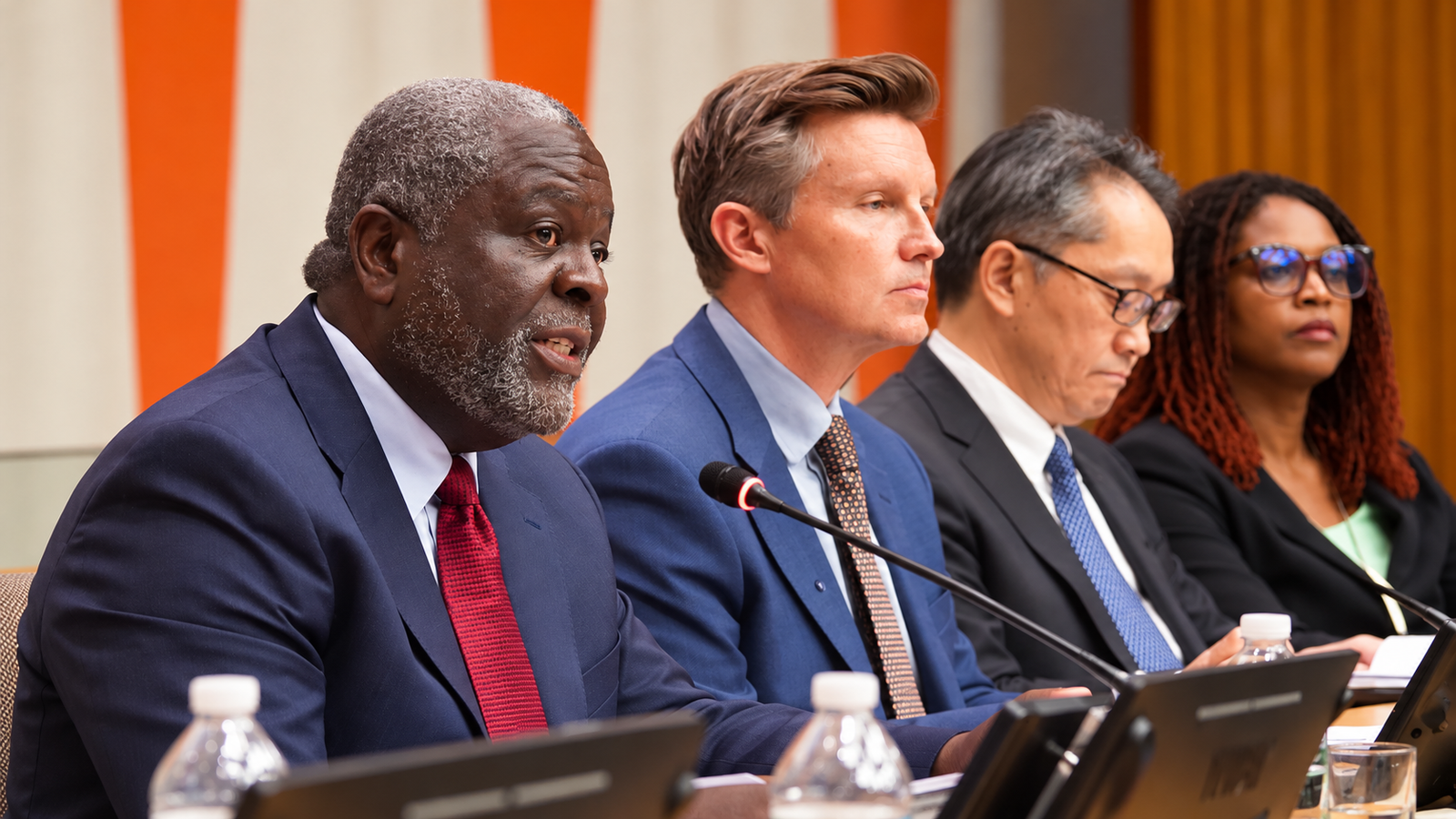
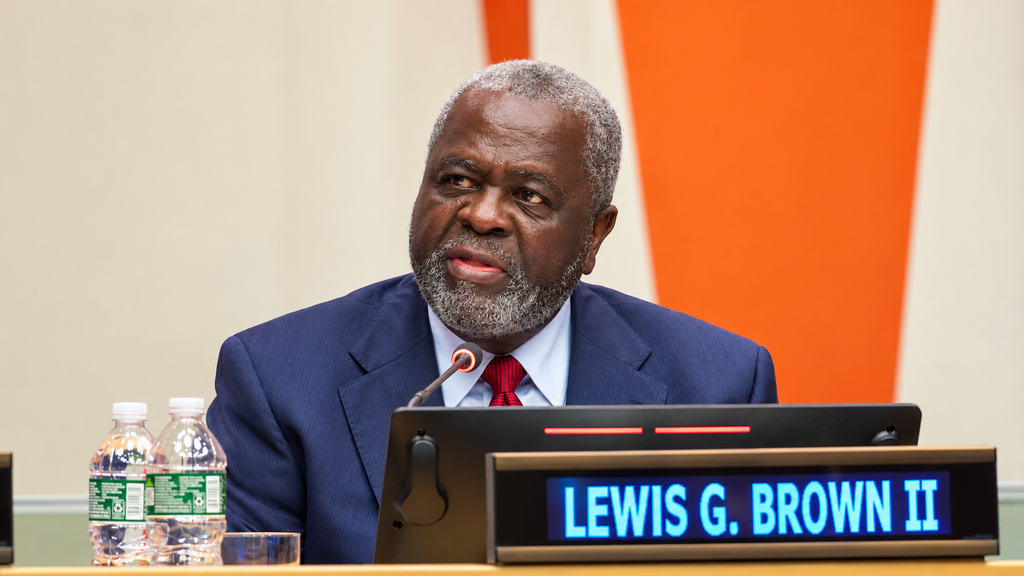
Speaking at the Challenges Annual Forum 2026 (CAF26), held Thursday, October 8, at the United Nations Headquarters in New York, Liberia’s Permanent Representative to the UN, Ambassador Lewis G. Brown II, outlined proposals aimed at improving cooperation between international peace missions, host governments and the communities they serve.
Brown’s proposals, detailed in an account of his remarks made available to BanaBridge News, focus on continuous political engagement, shared accountability, stronger national institutions and better coordination between peacekeeping and long-term development.
His intervention comes at a critical period for the United Nations, which is reviewing the future of its peace operations amid increasingly complex armed conflicts, financial pressures and questions about the effectiveness of international interventions.
The conference, organized through the Challenges Forum and hosted by the permanent missions of Sweden, Denmark and Pakistan, brought together diplomats, UN officials, peace operations practitioners and policy experts under the theme, “Turning the Tide: Building Momentum for Peace Operations in a Demanding World.”
According to the organizers, discussions centered on how peace operations can remain effective despite political divisions, shrinking resources and growing expectations from countries affected by conflict.
Liberia Calls for Consent Beyond Government Approval
A central argument in Liberia’s presentation was that consent from a host government should not be treated as a one-time authorization for international forces to enter and operate within a country.
Instead, Liberia proposed that consent should be continuously maintained through dialogue among governments, peace missions, civil society organizations and local communities.
This approach would require international peace operations to build and preserve public confidence throughout their deployment, rather than relying exclusively on agreements negotiated with political authorities.
Brown captured that position in a statement contained in the account of his remarks:
“If we are truly committed to turning the tide and building momentum for peace operations in a demanding world, then we must move beyond viewing consent as permission and begin treating it as a sustained partnership grounded in reciprocal accountability.”
The proposal reflects an important challenge confronting international peace missions: although governments may formally authorize foreign peacekeepers to operate within their borders, the acceptance of those missions by ordinary citizens cannot automatically be assumed.
Liberia’s position suggests that maintaining public confidence, responding to community grievances and ensuring meaningful consultation should become central elements of peacekeeping operations.
Stronger Accountability for Governments and Peace Missions
Liberia also called for responsibility to be shared among host governments, international peace missions, regional organizations, development partners and local communities.
Brown argued that strengthening national institutions must be an essential part of international peace interventions.
The measures proposed included stronger legislative oversight, support for independent institutions, increased civil society participation and accessible systems through which communities can provide feedback on peace operations.
Such mechanisms could help make peacebuilding decisions more transparent while giving citizens greater opportunities to question government policies and the conduct of international missions.
The emphasis on accountability is particularly significant because peacekeeping operations often take place in countries where public institutions have been weakened by armed conflict, political instability or prolonged governance failures.
In such environments, restoring public confidence in national institutions can be as important to long-term stability as ending active hostilities.
Liberia’s proposals therefore place responsibility not only on peacekeepers to perform their duties but also on national authorities to strengthen the institutions expected to maintain stability after international missions depart.
Exit Planning Must Begin When Missions Are Established
Another major recommendation was that the United Nations should begin planning for the eventual transition and withdrawal of peace operations from the outset of their deployment.
Rather than treating peacekeeping, peacebuilding, development and governance assistance as separate activities, Liberia urged that they be coordinated as connected stages of a single process.
This would allow governments and international partners to identify early which institutions must be strengthened before security responsibilities can be transferred to national authorities.
It would also encourage closer cooperation between peacekeeping missions, UN development agencies, national governments and other international partners.
The proposal addresses a recurring concern in international peace operations: whether countries emerging from conflict possess the institutions, resources and political stability required to sustain peace after international forces leave.
In Liberia’s view, the success of a peace mission should not be judged solely by its ability to reduce violence during deployment, but also by the strength and durability of the institutions left behind.
Liberia’s Own Peacekeeping Experience
Liberia’s position carries particular significance because of its experience hosting one of the United Nations’ major post-conflict peacekeeping operations.
The United Nations Mission in Liberia (UNMIL) was established in 2003 following the Comprehensive Peace Agreement that helped bring the country’s devastating civil conflict to an end.
Operating under UN Security Council Resolution 1509, the mission supported efforts to restore security, rebuild public institutions, strengthen the rule of law and facilitate political recovery. UNMIL formally completed its mandate on March 30, 2018, after nearly 15 years in the country.
Its closure marked an important milestone in Liberia’s recovery from civil war, demonstrating that a major international peacekeeping mission could withdraw while leaving national authorities responsible for maintaining stability.
However, the end of UNMIL did not mean that every underlying cause of conflict had been resolved.
The United Nations has acknowledged that Liberia’s post-conflict recovery continued to face challenges involving weak accountability systems, unequal access to justice and longstanding socioeconomic inequalities.
Those concerns underscore why Liberia is now emphasizing institutional strengthening and sustained engagement as essential components of peacekeeping reform.
A December 2018 analysis by the International Peace Institute also identified UNMIL’s transition as an important source of lessons for future UN peacekeeping withdrawals, while recognizing the continuing challenges of maintaining international support after a mission closes.
Liberia’s intervention at the New York forum can therefore be understood against its experience as both a former host country and a current participant in international decisions about peace and security.
Growing Financial and Political Pressures on UN Peacekeeping
Liberia’s recommendations come as the United Nations confronts serious questions about the future of its peace operations.
In May 2026, UN Secretary-General António Guterres warned that institutional reforms were necessary to address mounting operational and financial pressures across the organization.
A UN80 reform progress report disclosed that deployments of military and police personnel in UN peace operations had declined by approximately 60 percent from their 2015 peak.
The same report identified proposed reductions of more than $650 million in peacekeeping budgets for the 2026–2027 period, excluding new mandates.
At the same time, it pointed to the increasing complexity of modern conflicts, including the expanding military use of drones and artificial intelligence, the influence of transnational criminal organizations and growing geopolitical divisions.
These developments have intensified questions about whether traditional large-scale peacekeeping deployments remain appropriate for every conflict and whether the UN needs more flexible, politically focused and financially sustainable approaches.
The challenges also extend beyond resources.Peace operations depend heavily on political cooperation among the Security Council, countries contributing troops and police, host governments and parties to conflict. Where that cooperation breaks down, even well-resourced missions can struggle to carry out their mandates.
Against this background, Liberia’s call for sustained consent and reciprocal accountability addresses one of the fundamental conditions for successful peacekeeping: the willingness of all relevant parties to cooperate throughout a mission’s presence.
Regional Organizations Must Play a Greater Role
Liberia further advocated for stronger participation by regional organizations and strategic partners in the planning and implementation of peace operations.
According to the account of Brown’s remarks, regional institutions possess valuable local knowledge, political influence and established relationships that can strengthen international peace initiatives.
For West Africa, this approach has particular relevance because regional bodies such as the Economic Community of West African States (ECOWAS) have historically participated in conflict mediation and peace-support efforts, including during Liberia’s civil wars.
Greater regional involvement could help international missions better understand local political dynamics and maintain diplomatic engagement beyond the duration of a UN deployment.
However, effective partnerships would still require clear responsibilities, adequate resources and coordination between regional organizations and the United Nations.
A New Debate Over the Future of Peace Operations
The October 8 conference followed a major United Nations review of all forms of peace operations, requested by member states under the Pact for the Future adopted in September 2024.
The review, jointly led by the UN Department of Peace Operations and the Department of Political and Peacebuilding Affairs, examined both peacekeeping operations and special political missions.
Its final report was submitted to the General Assembly and Security Council on August 20, 2026, and presented to the General Assembly six days later.
The exercise sought to identify ways the UN could respond more effectively to changing security conditions through approaches better suited to individual conflicts and political circumstances.
For Liberia, which began serving a two-year term as a non-permanent member of the Security Council in January 2026, the debate offers an opportunity to bring its post-conflict experience into discussions that will shape future international peace interventions.
As the United Nations prepares for a leadership transition following Secretary-General Guterres’ term, Liberia’s message is that lasting peace cannot be secured through military deployments alone.
Its proposals place greater emphasis on accountable national institutions, continuous public engagement, regional cooperation and transition strategies that begin long before peacekeepers are scheduled to leave.
The challenge for UN member states will be determining how far those principles can be translated into practical decisions, adequate financing and measurable responsibilities for international missions and the countries they serve.
For Liberia, the underlying lesson is rooted in its own history: ending a conflict is an essential achievement, but ensuring that peace survives the departure of international peacekeepers is the more enduring test.
About The Author