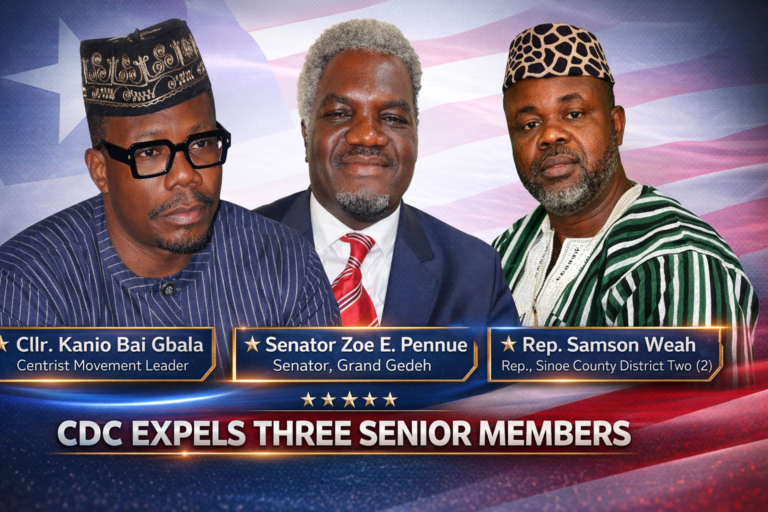

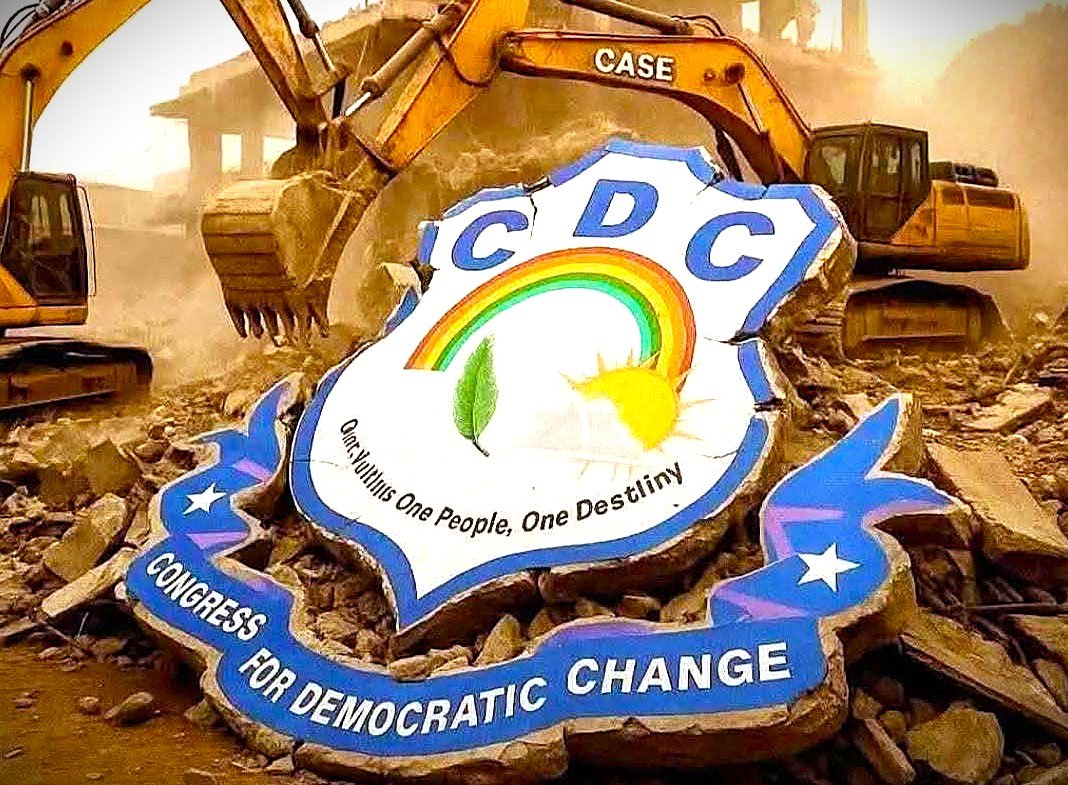
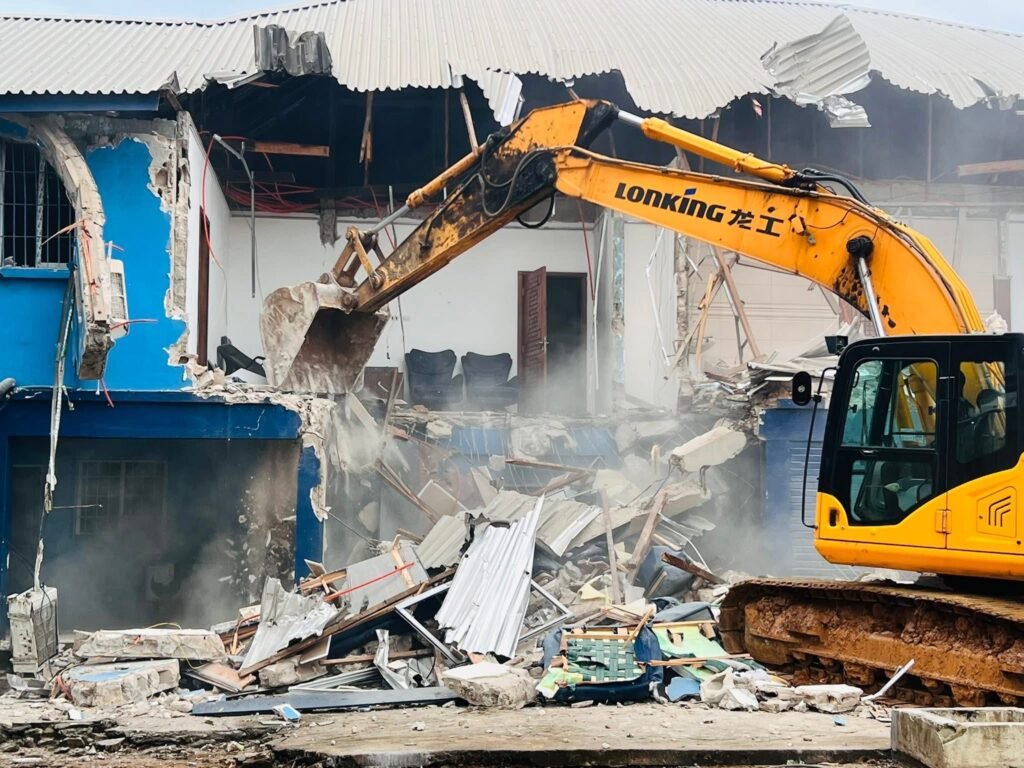
Monrovia, Liberia: The demolition and eviction at the Coalition for Democratic Change (CDC) headquarters this week has pushed Liberia’s political tensions into the spotlight, raising questions about the rule of law, selective enforcement, and the health of the country’s fragile democracy.
Weah’s Framing: A Battle for Rule of Law
Former President George Manneh Weah condemned the action as “a gross disregard for the rule of law”, accusing President Joseph Boakai’s government of weaponizing state institutions to weaken its opponents. In a measured but forceful statement, Weah said the eviction was not a lawful act but “a failed mission to destroy and erase the CDC.”
Weah urged his supporters to remain calm and law-abiding, even as he framed the Unity Party (UP) as a partisan administration intent on consolidating power through intimidation. His balancing act denouncing the ruling party while discouraging violence was clearly aimed at preserving the CDC’s image as a law-abiding opposition while tapping into public discontent.
Boakai’s Contradiction: “The Law is the Law”
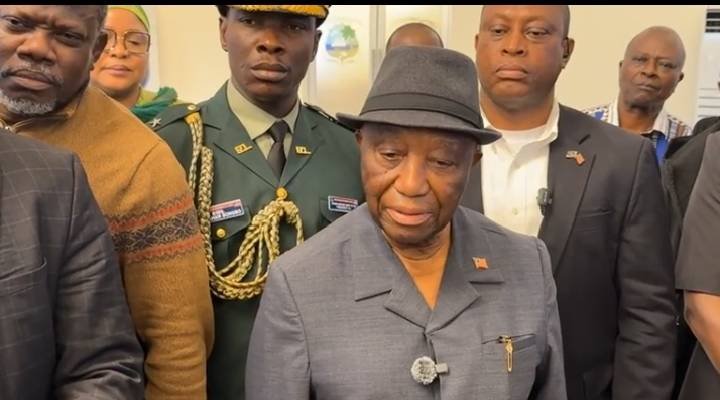
President Joseph Boakai, when pressed on the controversy, defended his administration’s role in the eviction, bluntly stating: “The law is the law.” Yet, critics have pointed out the glaring contradiction in his position: only a few months ago, the Boakai government stood accused of ignoring a Supreme Court ruling, undermining its credibility on matters of legal consistency.
This selective embrace of the judiciary has fueled accusations that the Unity Party applies the law unevenly firm when it weakens opponents, flexible when it challenges the ruling establishment. The symbolism of enforcing an eviction against the country’s largest opposition party, while previously dismissing court orders, risks eroding public confidence in the government’s commitment to justice.
A Risky Precedent for Governance
The public demolition of a major opposition headquarters is more than a property dispute; it sets a dangerous precedent. In a country scarred by decades of authoritarian overreach, the optics of bulldozers, riot police, and partisan cheers reinforce fears that state power is once again being weaponized. Civil society actors warn that such actions, if unchecked, could roll back Liberia’s democratic gains and embolden hardliners on both sides.
CDC’s Resilience Narrative
For the CDC, the incident may paradoxically serve as a rallying point. Weah quickly announced the creation of a “Special National Headquarters Delivery Committee” tasked with building a modern replacement. By shifting the narrative from destruction to reconstruction, the CDC is positioning itself as resilient and forward-looking.
Weah’s rhetoric that “our unity and identity are not found in bricks and mortar” resonates deeply with partisans who see themselves as survivors of political marginalization. In symbolic terms, the demolition risks strengthening rather than weakening the CDC’s opposition credentials.
A Test for Liberia’s Democracy
The CDC eviction has laid bare the double standards and political fragility of Liberia’s democratic institutions. For President Boakai, the episode highlights the urgent need to prove his government respects the law consistently; not only when it is politically expedient. For Weah and the CDC, the challenge is to turn grievance into legitimate opposition politics without inflaming instability.
Whether Liberia emerges from this standoff with its democratic fabric intact; or slips further into partisan conflict, will depend on how both leaders manage the fallout.
About the Author