
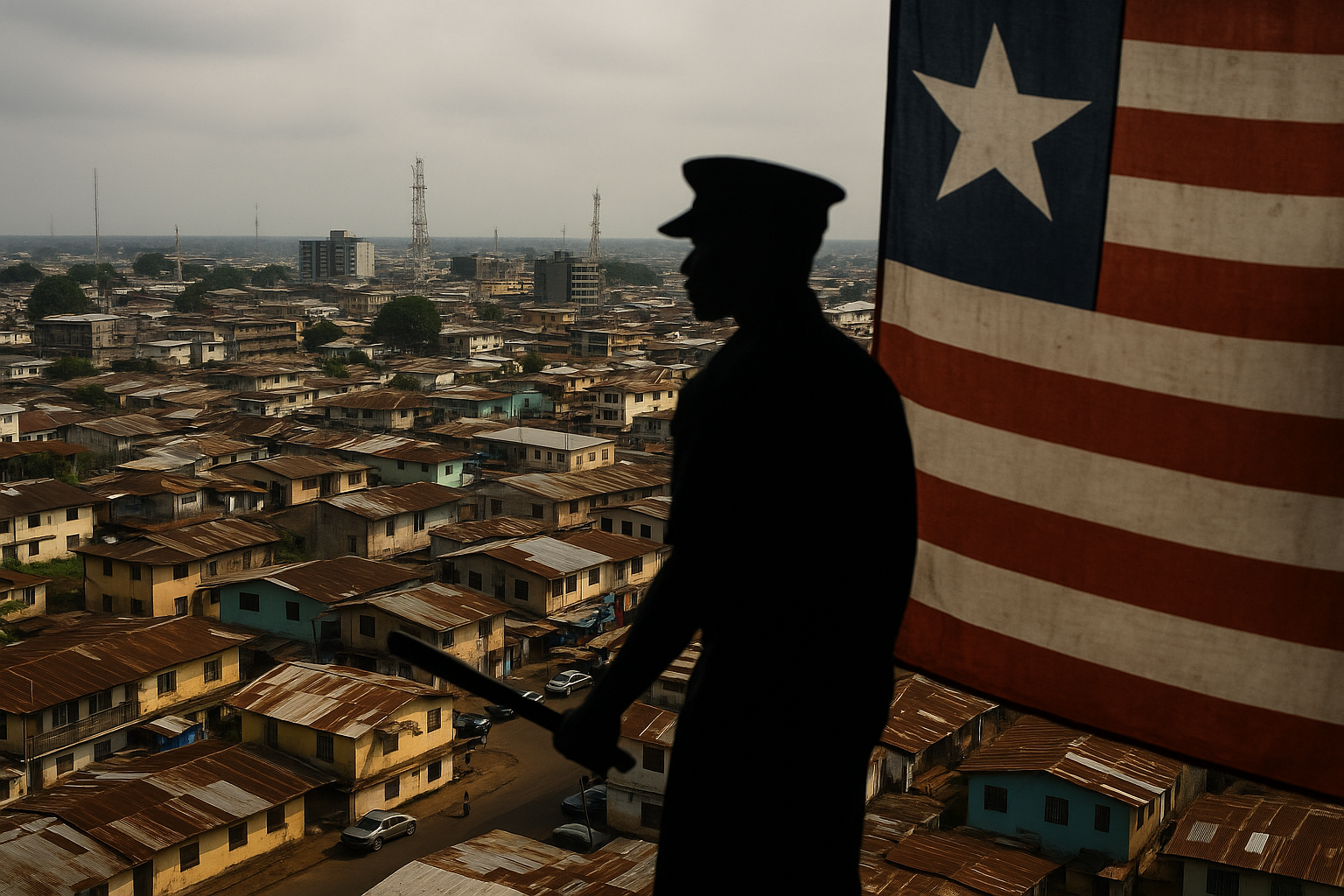
Silhouette image of a Police Officer overlooking the city of Monrovia
WASHINGTON DC: Despite official rhetoric of reform and accountability, Liberia’s 2024 human rights record paints a damning portrait of a state where abuses by security forces, corruption in justice, and attacks on press freedom remain entrenched; and largely unpunished.
The latest U.S. State Department Human Rights Report reveals a nation grappling with credible reports of arbitrary killings, torture, unlawful detentions, and severe restrictions on fundamental freedoms. The findings raise urgent questions about the government’s willingness and ability to protect its citizens from abuse, even as it claims progress.
Extrajudicial Killings and Prison Deaths
The year saw multiple reports of arbitrary or unlawful killings at the hands of state agents. In April, an inmate’s suspicious death inside Fish Town Central Prison triggered riots, property destruction, and a mass jailbreak. Six prison officers were implicated, with investigations revealing possible collusion in the escape. Yet, by year’s end, most had been cleared; underscoring what rights groups say is a pattern of impunity for security officers accused of lethal misconduct.
Torture Still in the Shadows
Despite laws prohibiting cruel and degrading treatment, the report details persistent police brutality and excessive force, particularly within the Liberia National Police (LNP) and the Liberia Drug Enforcement Agency. One of the most shocking incidents involved Patrolman Jerome Tokpah, accused of hacking a civilian with a machete. Tokpah faces attempted murder charges, but activists note such cases rarely end in convictions.
Even more troubling is the government’s lack of political will to outlaw female genital mutilation/cutting (FGM/C). UN data cited in the report shows half of all rural women aged 15–49 have undergone the practice, despite a three-year “ban” announced in 2023 that rights groups say is not legally binding.
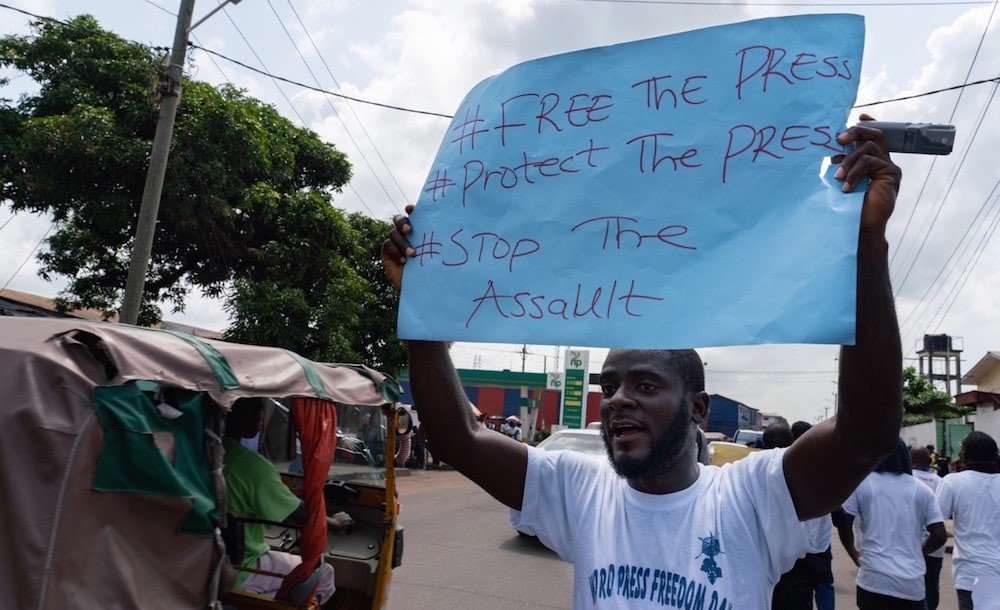
Freedom of the Press Under Threat
While the Liberian constitution enshrines freedom of expression, the report outlines systematic harassment and intimidation of journalists. Community radio station managers have been suspended over politically sensitive reporting, while government-imposed accreditation rules; including police clearances and tax compliance certificates; are seen as thinly veiled censorship. Editors walked out of a June meeting with the Presidential Press Secretary, over these demands.
“A June 20 meeting between Presidential Press Secretary Kula Fofana and media executives turned contentious, leading several editors to walk out”, the report indicated citing; “The incident arose concerning new accreditation requirements for journalists covering the executive mansion, including police clearances and institutional tax clearance certificates. These policies, along with demands by the government for free website advertising, which impacted newspaper revenues, sparked concerns regarding media freedom and independence”.
Justice Delayed, Justice Denied
Perhaps the most glaring indictment of Liberia’s justice system is the rampant use of prolonged pretrial detention. Nearly 60% of pretrial detainees languish in cells for more than six months without a hearing, in blatant violation of the law. Judges routinely ignore constitutional timelines, while the bail system is riddled with bribery and political interference. The case of alleged Guinean mercenary Ibrahim Kalil Cherif, reportedly held without charge and then surrendered to Guinea without court authorization; epitomizes the collapse of due process.
Labor Exploitation and Unsafe Work
The report also exposes systemic violations of labor rights, including government interference in trade unions, wage theft in the informal sector, and deadly occupational hazards in mining and construction. A mudslide that killed 10 artisanal miners in Rivercess County illustrated the lethal cost of lax regulation and corruption in resource extraction.
Corruption in Refugee Protection
Even humanitarian sectors were not immune. In October, the head of Liberia’s refugee commission and two top aides were fired after whistleblower allegations of document fraud and theft of refugee funds. The Liberia Anti-Corruption Commission opened an investigation.
2025 Outlook: How Bad Will the Next Human Rights Report Be?
Expect another bleak report; with some narrow signs of progress on war-crimes accountability overshadowed by continuing abuses in policing, press freedom, detention, and exploitation.
Why we predict deterioration or no meaningful improvement in key areas:
- Press freedom pressure persists. As recently as August 13, 2025, local media highlighted government pressure and dismissals over social-media criticism continuity with 2024’s censorship concerns. This suggests the 2025 report will again cite reprisals against speech and administrative hurdles for journalists.
- Pretrial detention remains acute. A senior judge publicly warned against prolonged pretrial detention as the August court term opened, and separate reporting cited over 2,100 pretrial detainees nationwide as of July 31, 2025; evidence that the systemic backlog and rights violations are ongoing. Expect the 2025 report to reiterate widespread unlawful detention.
- Drug-crisis response risks heavy-handed policing. On August 7, 2025, thousands of women protested the surging drug epidemic, demanding tougher penalties and specialized courts. Without rights-safeguards, escalated enforcement could fuel abusive policing, arbitrary sweeps, and due-process violations; a likely red-flag in the next report.
- FGM remains largely uncriminalized. Calls intensified in April 2025 for a national law banning FGM, underscoring that moratoria and traditional edicts haven’t closed the legal gap. A recent graduation of a huge number of women and girls from the Sande Bush in Lofa may also be detailed in the report. Expect the 2025 report to again flag failure to enact a statutory ban and ongoing prevalence.
- Illegal/mining abuses and OSH failures continue. The EPA’s May 2025 monitoring flagged serious violations and environmental damage tied to mining in multiple counties; conditions historically linked to fatal accidents and exploitative labor. Don’t expect material improvements in OSH enforcement in 2025.
Where there could be incremental improvement (watchlist):
- Accountability for war-era crimes. The Senate’s 2024 approval of a war-crimes court and President Boakai’s July 2025 apology to war victims indicate momentum; if financing and operationalization follow. The 2025 report may credit steps toward accountability, while noting slow implementation and the absence of trials to date.
- Overall civic space. Freedom House still rates Liberia “Partly Free” in 2025; scores are flat, reflecting stagnation rather than progress which aligns with a likely “no significant change” conclusion in the next U.S. report.
Bottom line forecast
- Likely overall assessment: “No significant changes” with worsening notes on pretrial detention and media pressure, heightened risk of policing abuses amid the drug crackdown, continuing gaps on FGM legislation and OSH enforcement, and tentative, not yet substantive, gains on war-crimes accountability.
Methodological Note
This forecast draws on 2025 developments from reputable outlets and official statements to anticipate themes the next report will document, mapped against persistent 2024 problem areas.
About the Author