
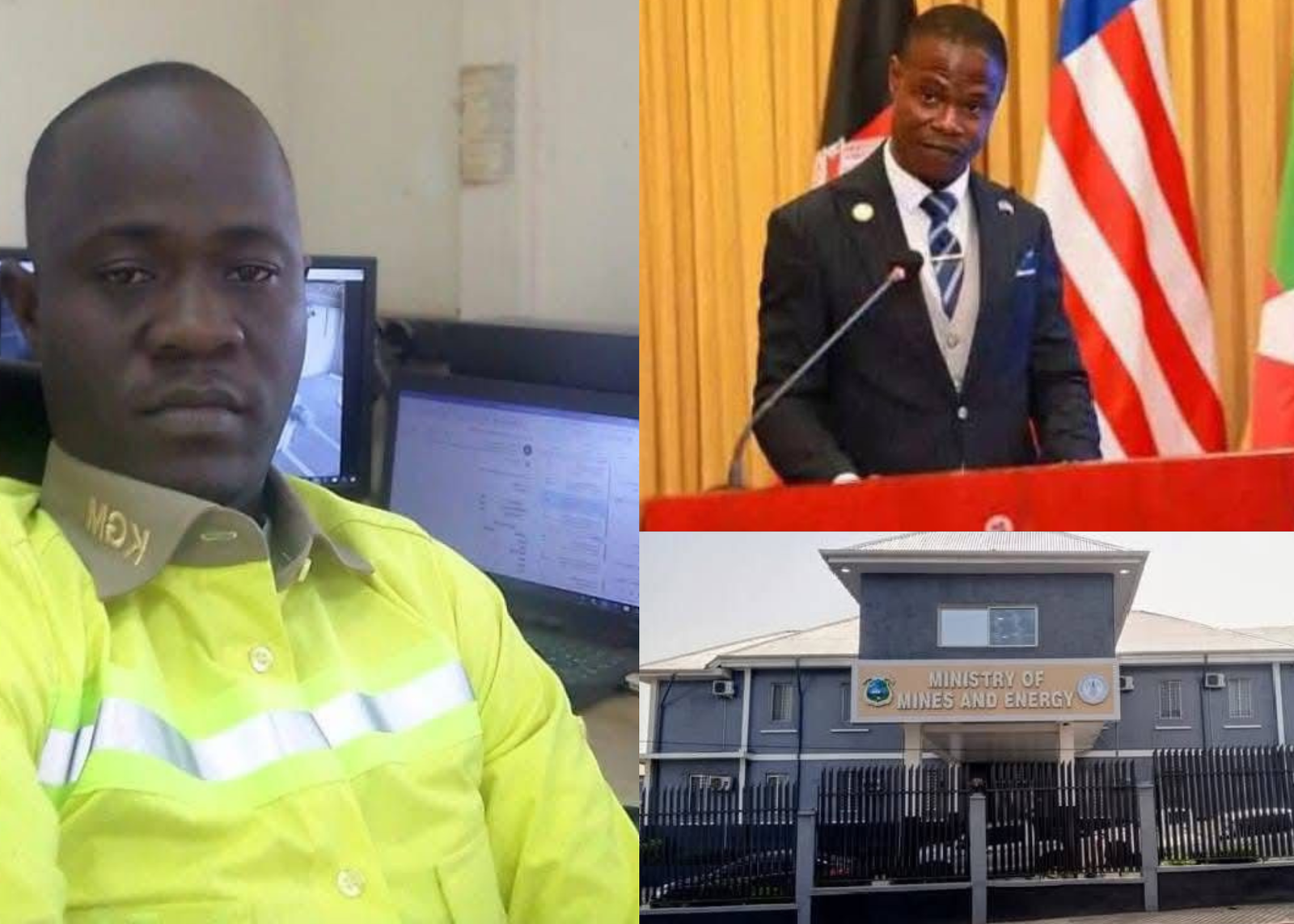
MONROVIA: Serious allegations of bribery, nepotism, and systemic graft have rocked Liberia’s Ministry of Mines and Energy, threatening to erode public trust in a sector already plagued by poor governance and investor skepticism.
In a detailed complaint dated August 8 and addressed to President Joseph N. Boakai, a coalition of frontline mining enforcement agents accused three of the ministry’s most senior officials of orchestrating schemes to enrich themselves while undermining state authority in the mining sector.
The officials named are:
- Alwell Aloysius Carr, Director of Mines
- Carlos Tingban Edison, Assistant Minister for Mines
- Williams S. Hines, Deputy Minister for Operations
Allegations of Bribery and Abuse of Office
Director Carr is accused of accepting cash payments from unlicensed Chinese operators, including $5,000 in June from a miner in Bentol City and an additional $15,000 in July in Grand Cape Mount County. Enforcement agent Isaac Scott is alleged to have facilitated the transactions on Carr’s behalf.
Assistant Minister Edison faces accusations of constructing a nepotistic network inside the ministry by positioning family members; including his brother, Robert Y. Paye in Sinoe County, in enforcement roles to extort illicit payments from miners. The complaint alleges these proceeds financed personal ventures, including real estate and a beauty salon managed by his spouse.
Deputy Minister Hines is alleged to have run a sophisticated cash-collection syndicate through his driver and associates Samuel T. K. Wilson, Levi Sendolo, and Pape Paybayee. According to whistleblowers, the group routinely transported bribe payments from Chinese mining companies to Hines’ residence on the Robertsfield Highway.
Whistleblowers Highlight Systemic Corruption
The mining agents say the alleged misconduct is not isolated, but part of a wider culture of impunity within the ministry. They contrasted their own grueling fieldwork; sleeping in the bush, traveling long distances by motorbike, and risking confrontations with illegal miners; with what they described as the “lavish lifestyles” of senior officials profiting from the very violations they are mandated to police.
“This represents everything we opposed when we voted for change,” the agents wrote, warning that unless swift action is taken, Liberia’s mining sector risks losing credibility with international investors.
Calls for Accountability and Reform
Citing fears of retaliation, the whistleblowers have demanded President Boakai immediately restructure the ministry’s leadership and launch a comprehensive investigation into the allegations. They stressed that without accountability, Liberia’s extractive sector will continue to enrich a few at the expense of national development.
The agents concluded their letter with a plea for systemic reform: “Liberians deserve a mining sector governed by transparency, law, and ethical conduct; not one where public office is reduced to a cash collection scheme.”
Broader Implications
The accusations come amid mounting pressure on the Boakai administration to demonstrate credibility in its anti-corruption campaign. Observers say how the President responds to this case will test his government’s resolve to confront entrenched patronage networks in one of Liberia’s most lucrative but poorly regulated industries.
About the Author