


Monrovia, Liberia – The dramatic eviction, demolition, and arrests at the Coalition for Democratic Change (CDC) headquarters have sparked sharp debate about what the courts actually ordered; and whether the enforcement went beyond the four corners of the writ.
What the Court Ordered
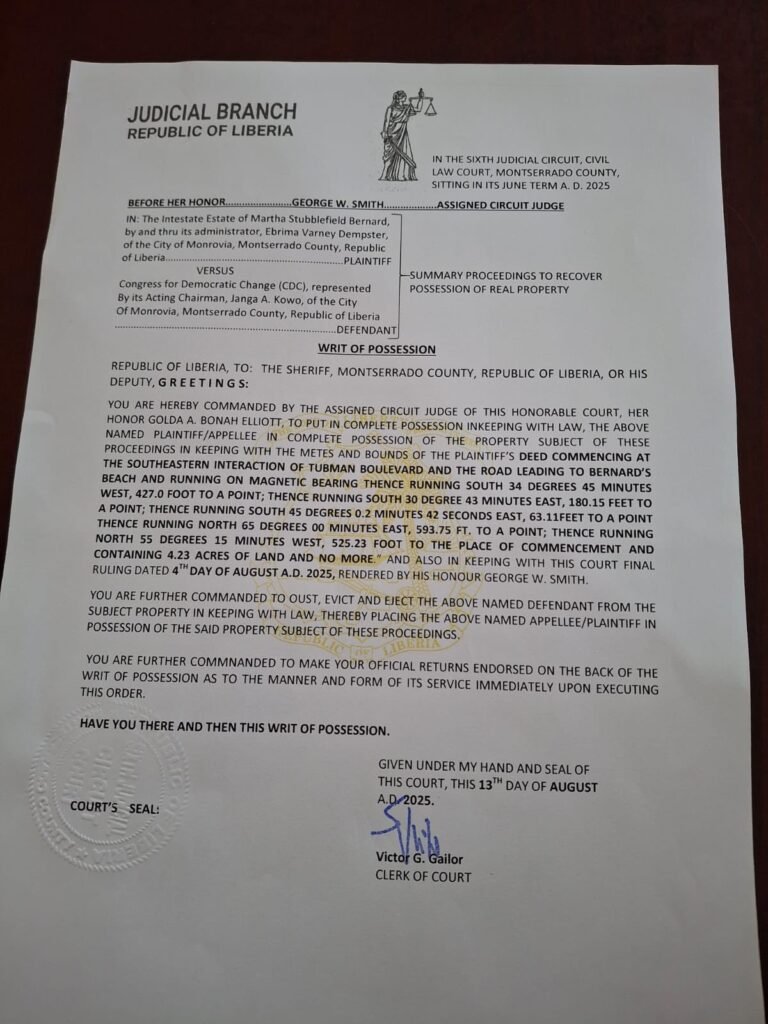
On August 13, 2025, the Civil Law Court, Sixth Judicial Circuit, Montserrado County, acting under Judge George W. Smith, issued a Writ of Possession in favor of the Intestate Estate of Martha Stubblefield Bernard. The order directed the Sheriff of Montserrado County to:
- Put the Bernard Estate in complete possession of a 4.23-acre parcel of land near Bernard’s Beach.
- Oust, evict, and eject the CDC and all occupants from the premises.
- File an official return describing how the writ was executed.
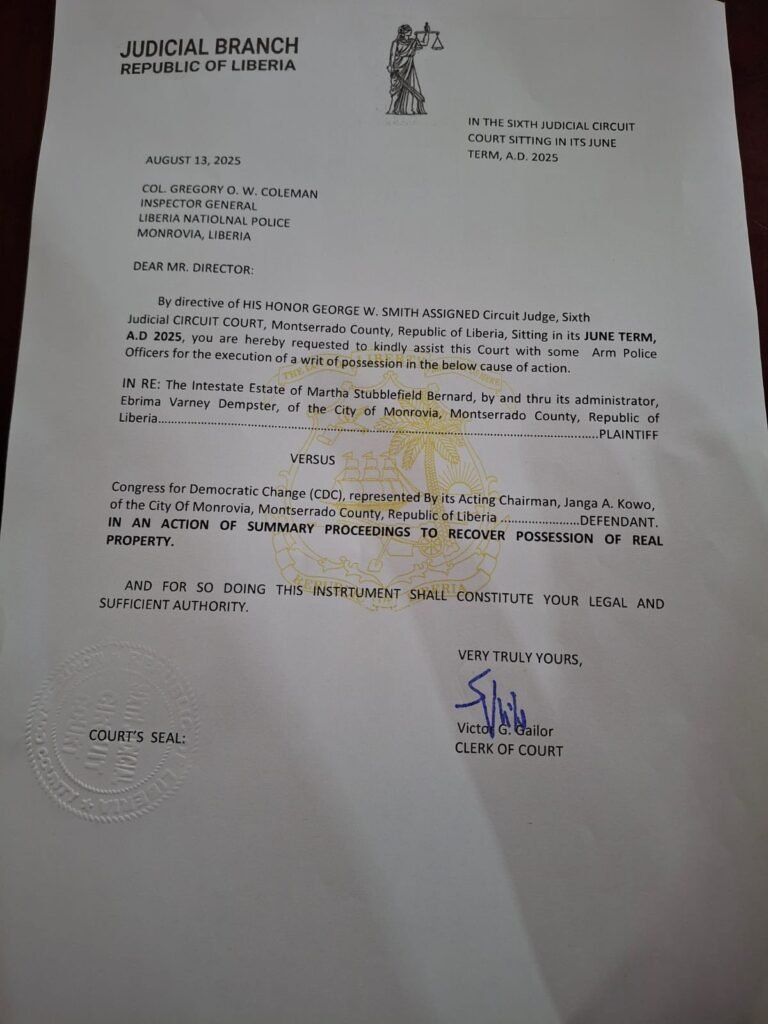
A separate letter from the Clerk of Court instructed the Inspector General of Police to deploy armed officers to assist the Sheriff in carrying out the eviction.
Nowhere in the writ or letter is there language authorizing demolition of structures, seizures of property as evidence, or arrests of individuals. The mandate is limited to possession and eviction.
What Happened on the Ground
Eyewitness accounts and reports confirm that the headquarters was not only cleared but demolished; even the famous “Sycamore Tree” was brought down. Police reportedly conducted searches and seizures inside the compound, and several arrests were made.
This raises critical questions:
- Was the demolition undertaken at the request of the new owner after possession was delivered?
- Were searches part of routine clearing of occupants’ belongings; or did they amount to criminal evidence collection requiring a separate warrant?
- Were the arrests tied to obstruction of the eviction, or were they part of a broader sweep?
The Legal Tension
The writ is clear in its scope: transfer of possession. Anything beyond that, such as demolition, criminal searches, or arrests; rests on other legal bases, not on this document.
- Demolition usually requires either an order from municipal authorities or the property owner’s initiative after possession is restored.
- Search and seizure must generally be backed by a criminal warrant or lawful exception.
- Arrests may be lawful if individuals resisted the eviction or broke the law during enforcement, but those powers flow from police authority, not from the writ itself.
Why This Matters
The divergence between what was ordered and what was executed fuels political narratives. Supporters of the CDC call it “state-sponsored suppression,” while government officials point to the Supreme Court’s earlier rulings affirming the Bernard Estate’s ownership.
The Sheriff’s official return; still expected to be filed, will be the key document clarifying what officers did under the writ and whether they stayed within its legal boundaries.
Until then, one fact is undeniable: the Court ordered eviction and possession, not demolition or arrests. The broader enforcement actions, though possibly justifiable under other laws, go beyond the writ itself.
About the Author