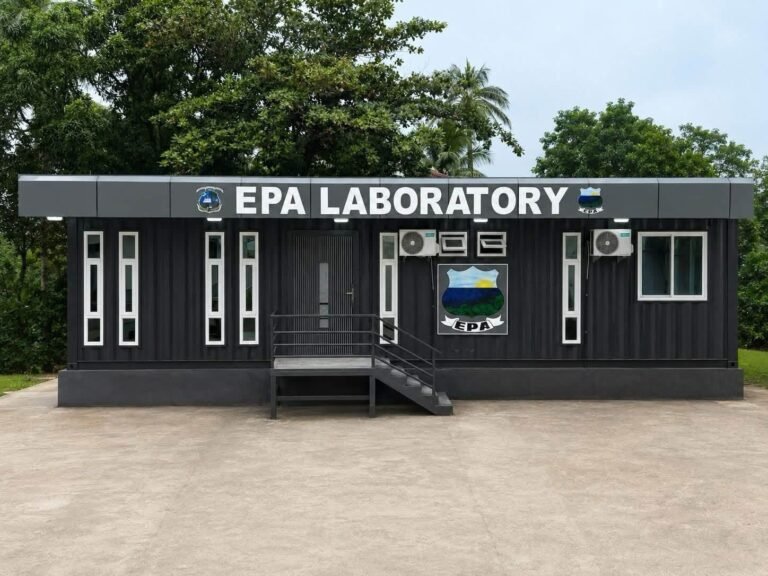


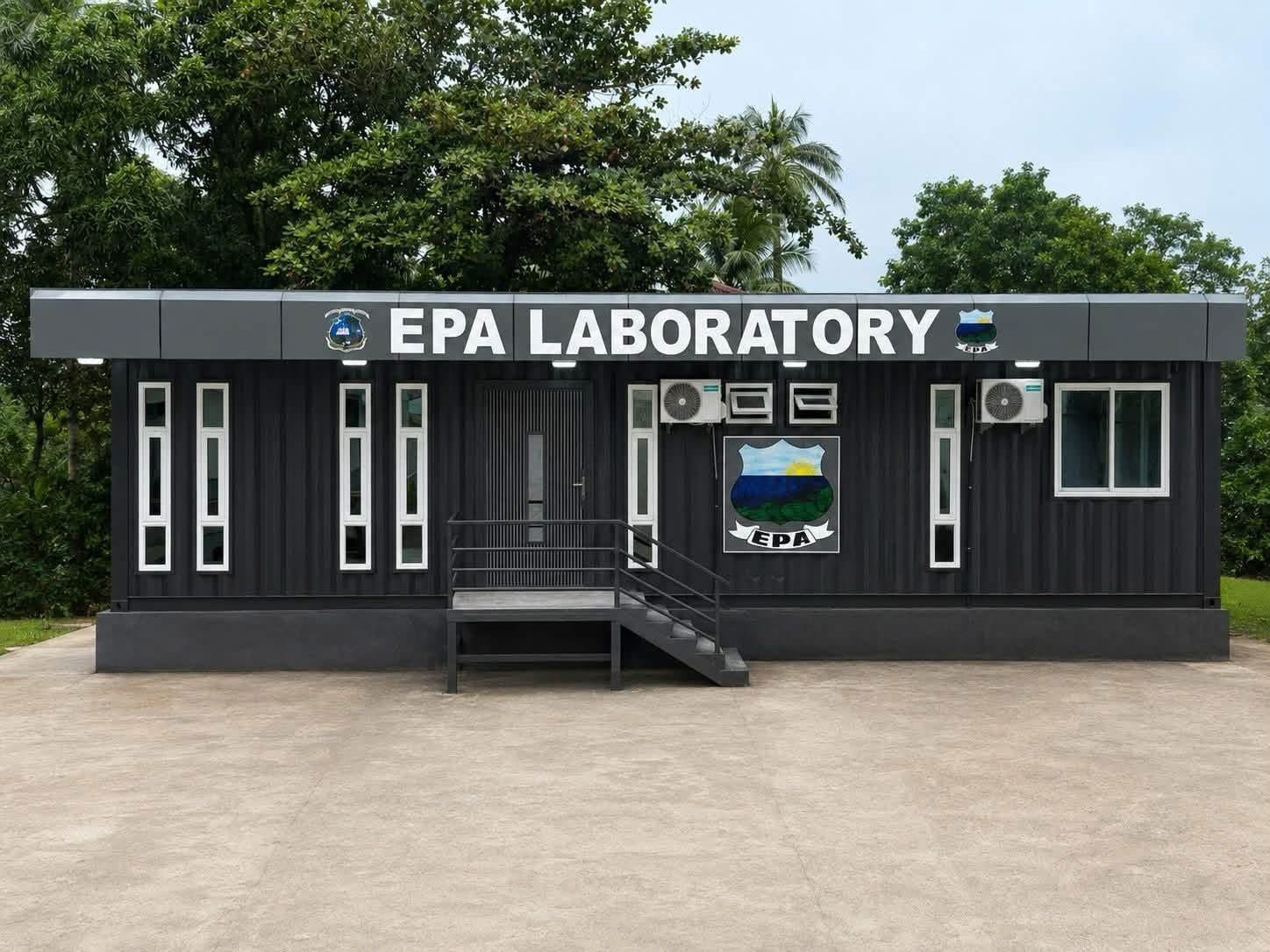
MONROVIA – Liberia has taken a significant step toward strengthening environmental research and scientific decision-making with the commissioning of a €100,000 Elemental Analyzer at the Environmental Protection Agency (EPA), a development expected to improve agriculture, climate research, pollution monitoring, and natural resource management.
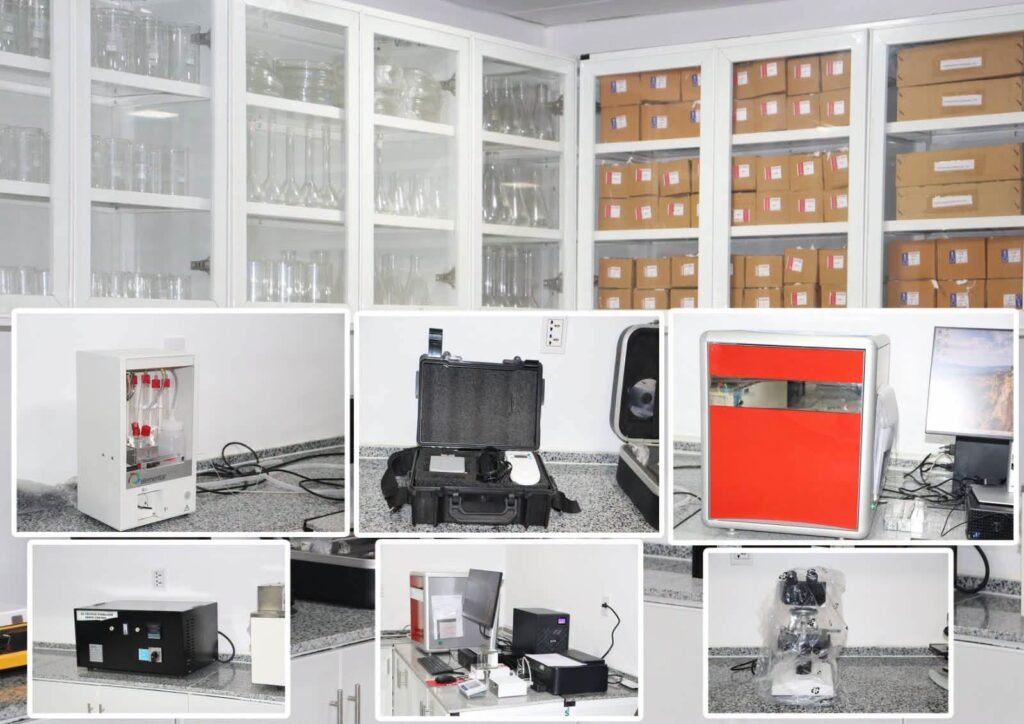
The state-of-the-art laboratory equipment, acquired with support from the International Atomic Energy Agency (IAEA), has been installed at the EPA’s headquarters and is expected to reduce Liberia’s dependence on foreign laboratories for environmental testing.
For years, Liberia has been forced to send environmental samples abroad for analysis, resulting in high costs and lengthy delays. With the Elemental Analyzer now operational in the country, scientists can conduct many of those tests locally, enabling faster results, reducing expenses, and improving evidence-based policymaking.
The equipment is capable of analyzing soil, plants, sediments, waste materials, and other environmental samples by measuring essential elements such as carbon and nitrogen. These measurements provide critical information on soil fertility, plant health, pollution levels, and the overall condition of the environment.
Boosting Agricultural Productivity
The EPA says one of the greatest beneficiaries of the new technology will be Liberia’s agricultural sector.
By accurately determining nutrient levels in soil, scientists will be able to advise farmers on the specific fertilizers required for crops such as rice, cassava, and vegetables. Officials believe this will lead to healthier crops, increased yields, lower production costs, and improved national food security.
The agency noted that better soil information can also contribute to lower food prices by helping farmers produce more efficiently.
Supporting Water Quality and Pollution Monitoring
Beyond agriculture, the Elemental Analyzer will enhance Liberia’s ability to monitor the health of rivers, lakes, wetlands, and coastal ecosystems.
By measuring carbon and nitrogen levels in water and sediments, scientists can detect pollution early, helping authorities protect drinking water sources, fisheries, and aquatic ecosystems while preventing harmful environmental degradation.
The EPA says the technology will also strengthen investigations into environmental incidents involving mining, industrial activities, waste disposal, oil spills, and damage to farmland or water bodies.
Laboratory analysis will provide scientific evidence to determine environmental impacts and support enforcement actions requiring responsible parties to restore damaged ecosystems.
Advancing Forest and Climate Research
Liberia’s forests, which provide livelihoods for thousands of citizens while absorbing large amounts of atmospheric carbon dioxide, are also expected to benefit significantly from the new equipment.
Scientists will now be able to estimate how much carbon is stored in Liberia’s forests by analyzing soil and plant samples. Such information is increasingly important as international climate financing mechanisms reward countries that successfully conserve forests and reduce deforestation.
The EPA believes reliable scientific data could improve Liberia’s ability to attract international funding for forest conservation, community development, and sustainable livelihoods.
Protecting Mangrove Ecosystems
The Elemental Analyzer will also strengthen research on Liberia’s mangrove ecosystems, which protect coastal communities from erosion, flooding, and storm surges while serving as breeding grounds for fish, crabs, oysters, and other marine life.
Mangrove soils store substantial amounts of carbon, commonly referred to as “blue carbon.” Officials say measuring these carbon stocks will help Liberia better understand the environmental and economic value of conserving its mangroves while improving access to international financing for coastal restoration projects.
Supporting Mining Oversight and Waste Management
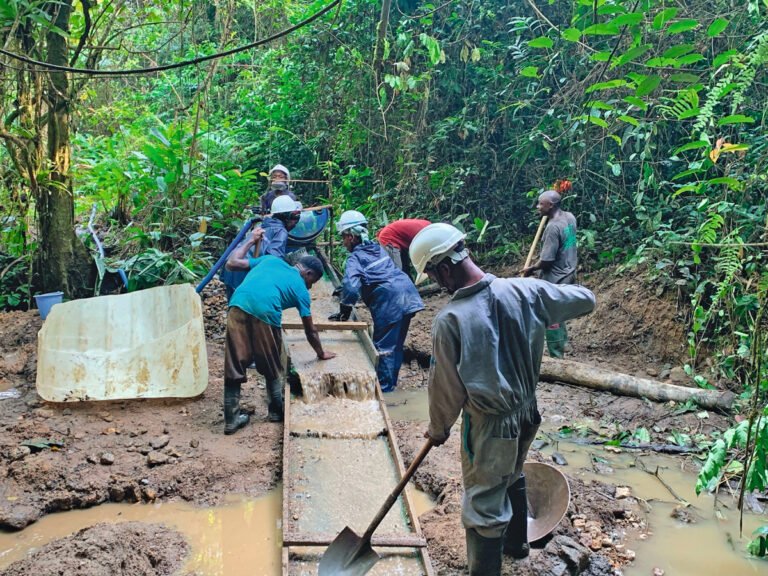
Mining communities are also expected to benefit from the EPA’s expanded scientific capacity.
The agency says the equipment will enable scientists to compare environmental samples collected from mining sites with those from unaffected areas, strengthening environmental monitoring and supporting land restoration efforts.
In addition, the technology will assist Liberia’s efforts to improve waste management by evaluating the quality of compost and recyclable organic materials.
Officials say this could encourage recycling, compost production, cleaner communities, and new business opportunities in the waste management sector.
Building Local Scientific Capacity
The EPA believes the new laboratory equipment will also benefit universities, students, and researchers by providing modern scientific facilities within Liberia.
The agency has previously collaborated with Manchester Metropolitan University on research into the carbon stored in Liberia’s mangroves. With the Elemental Analyzer now available, future studies can increasingly be conducted within Liberia, allowing greater participation by local scientists and students.
According to the EPA, improved access to modern laboratory technology will help train the next generation of environmental scientists, agricultural specialists, laboratory technicians, marine scientists, and researchers.
A Step Toward Science-Based Development
Officials say the Elemental Analyzer represents more than a scientific instrument; it is an investment in Liberia’s long-term development.
The equipment is expected to provide government institutions with reliable scientific data to guide decisions on agriculture, forestry, mining, pollution control, climate change, land restoration, coastal protection, and infrastructure development.
By producing environmental data locally, Liberia will be better positioned to make faster, science-based decisions while reducing dependence on foreign laboratories.
The EPA says the investment marks another milestone in its efforts to transform the institution into a modern, science-driven environmental regulator capable of protecting public health, supporting agricultural growth, conserving natural resources, and promoting sustainable national development.
This article was adapted by BanaBridge News from an original article authored by Dr. Emmanuel King Urey Yarkpawolo, Executive Director and Chief Executive Officer of the Environmental Protection Agency of Liberia, and Rafael Sarji Ngumbu, Director for Environmental Research and Radiation Safety at the Environmental Protection Agency of Liberia.
About the Author