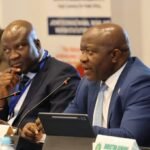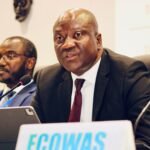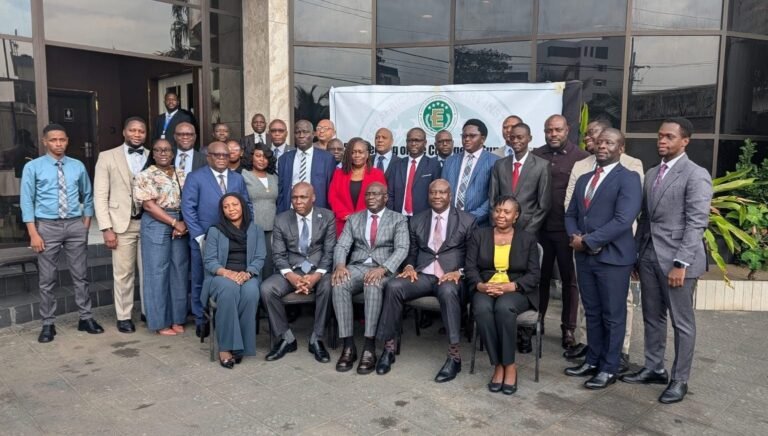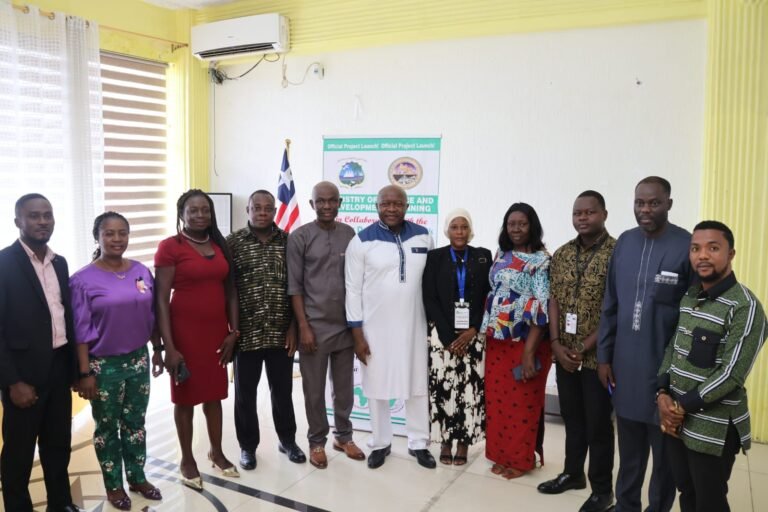

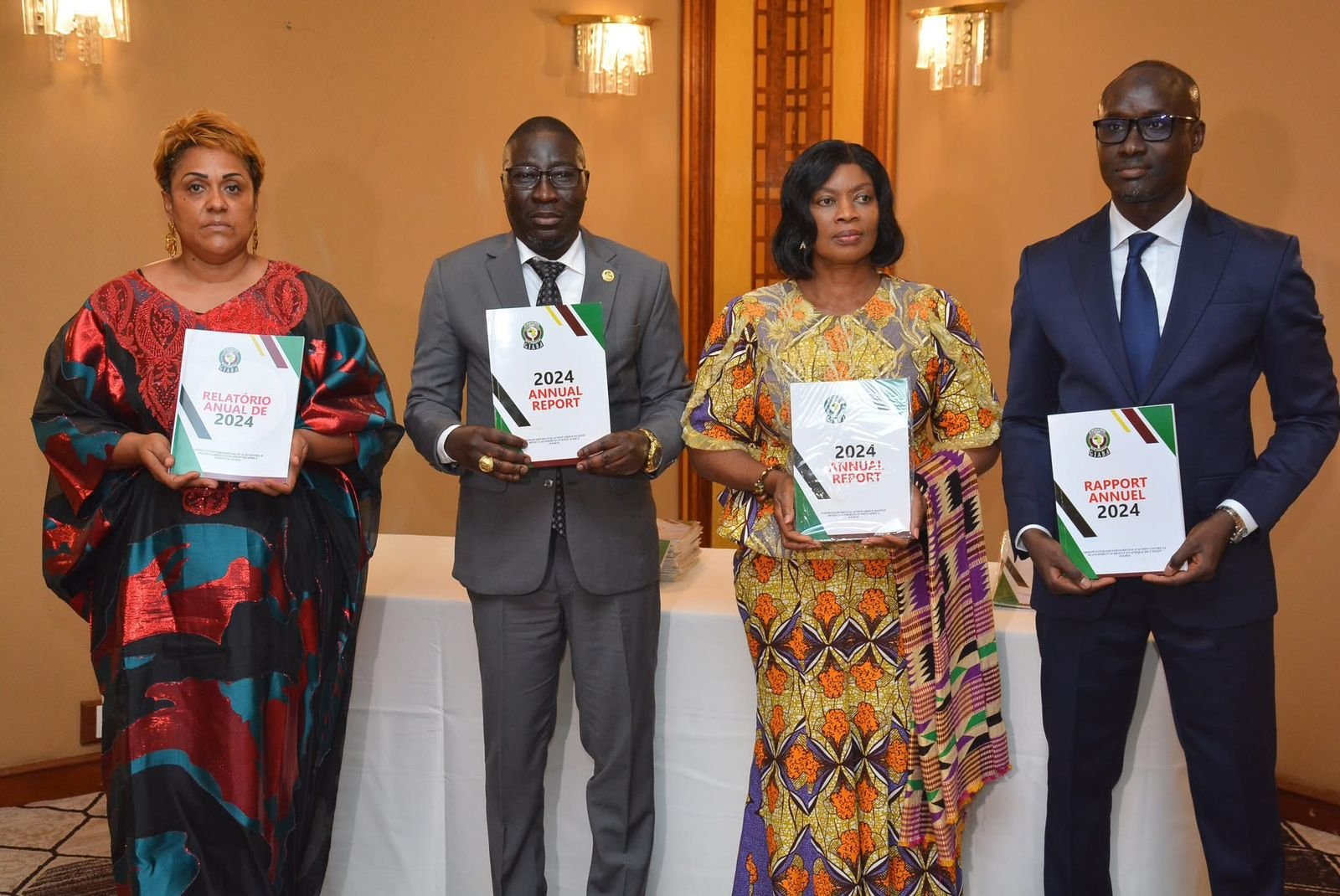
Harris and staff displaying GIABA Annual Report for 2024
Dakar – West Africa has made strides in building laws to tackle money laundering and terrorism financing, but poor enforcement and lack of political will continue to undermine the fight, the regional watchdog GIABA warned Tuesday.
Presenting its latest report, GIABA Director General Edwin W. Harris said illicit finance was bleeding economies, weakening institutions, and fueling extremist violence across the region. “Money laundering and terrorist financing distort markets, undermine financial institutions, and endanger peace and security,” he said.
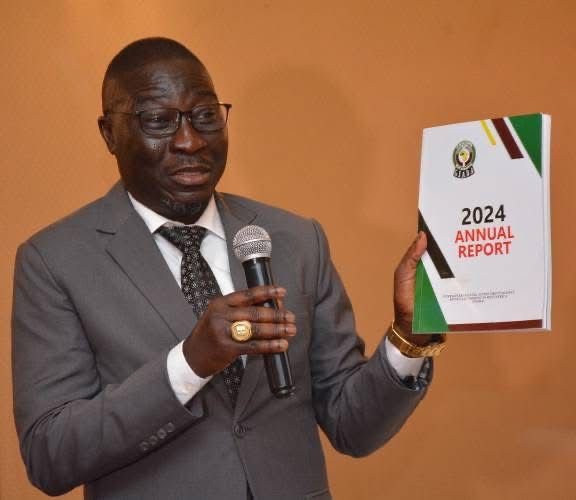
GIABA’s second round of evaluations, covering its 17 member states, found most countries had adopted new laws and strategies but were failing to implement them effectively. Six states were initially grey-listed, though Ghana, Senegal, and Mali have since exited in 2021, 2022, and June 2025.
“The challenge is not only about drafting legislation; it is about enforcing it,” Harris said, calling on leaders to allocate resources, empower regulators, and close loopholes exploited by criminals.
The watchdog warned that digital technologies and informal money transfer systems were giving criminals new tools to move illicit funds across borders.
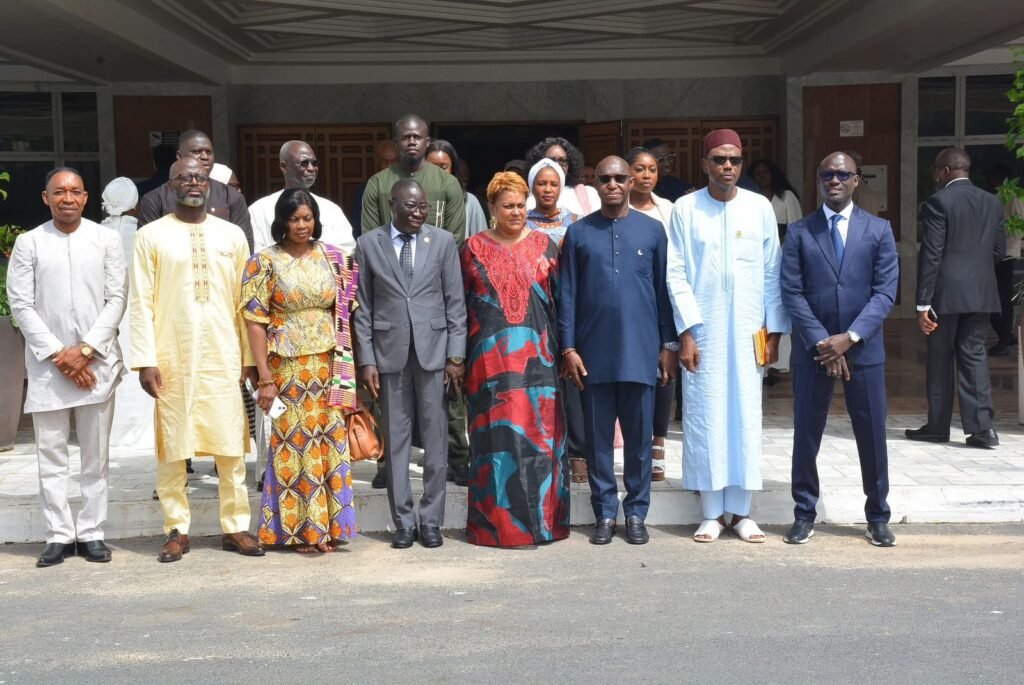
Harris, quoting Martin Luther King Jr., urged governments and civil society not to remain silent. “What we need is stronger political will,” he said.
GIABA, the Inter-Governmental Action Group against Money Laundering in West Africa, has been supporting member states with legal reforms, training, and capacity building. But its report stressed that the region’s battle against dirty money will only succeed if leaders translate commitments into action.
About the Author