
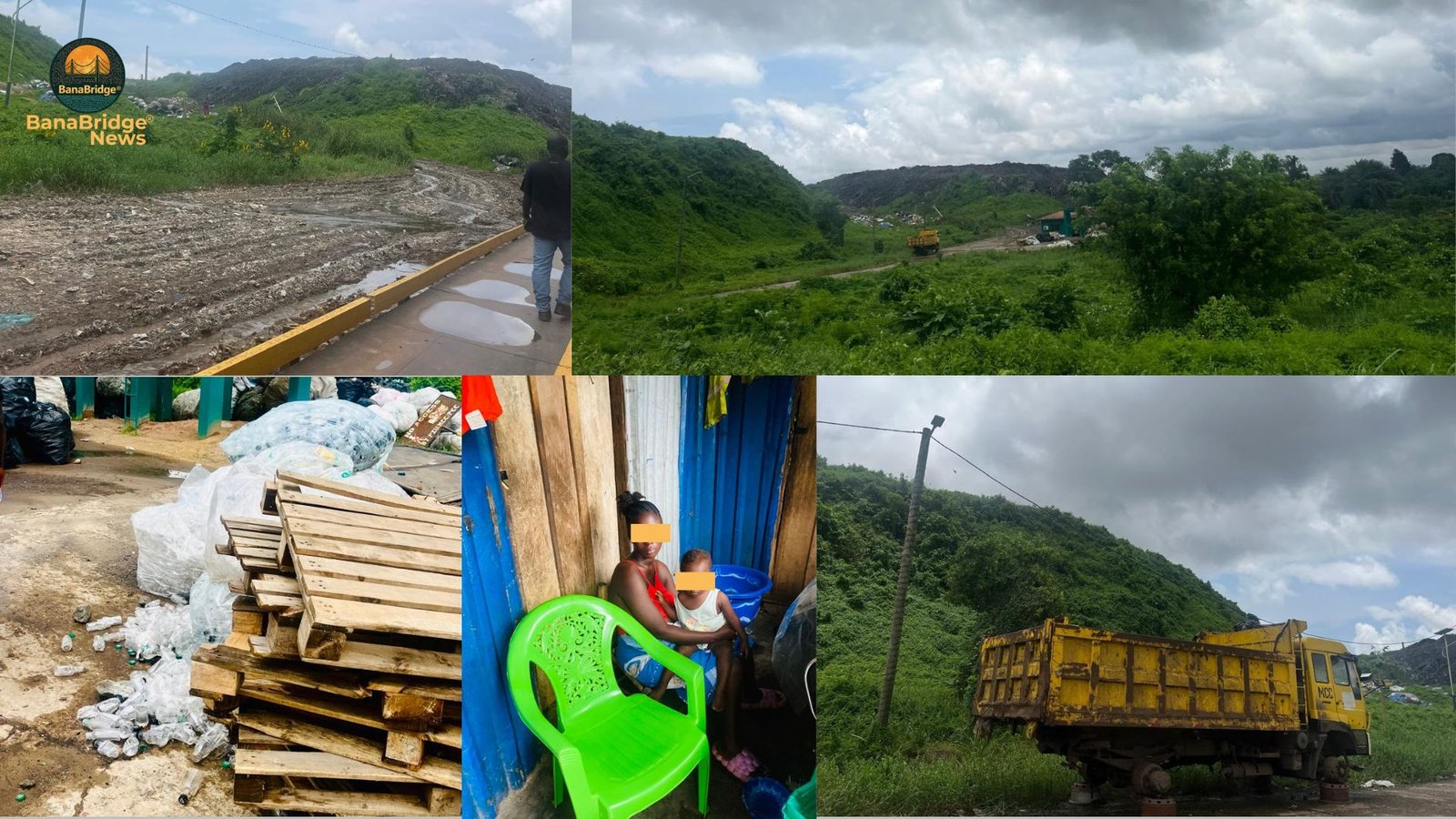
MONROVIA, LIBERIA: In the face of deepening poverty, hundreds of Liberians continue to gather daily at the Wein Town landfill to collect expired food discarded by the Ministry of Commerce ; a practice that poses grave health risks and could result in widespread fatalities if left unchecked.
A March 2024 World Bank report revealed that over half of Liberia’s population lives below the poverty line. With rising food costs, residents and market vendors are increasingly relying on spoiled products. In August 2024 alone, 1,050 metric tons of Fouta rice were disposed of, much of it later retrieved by desperate community members.
Residents Speak Out
At the site, residents admit the practice has become routine.
“People from all over come to buy rice, fish, chicken, and other expired goods,” said Josephine Banda, a mother of one. “It has become a habit. If you don’t have money or aren’t strong enough to fight for it, you won’t get anything when Commerce trucks arrive.”
Banda told BanaBridge News that City Police often try to intervene, but the crowds overwhelm them, leaving contaminated food to circulate back into homes and markets.
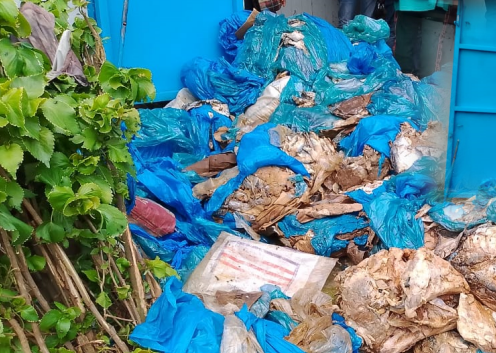
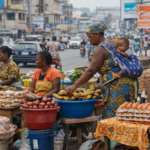
Korto Cooper, a vendor at Omega Market, explained how poverty forces her to participate:
“When we hear they’re dumping spoiled goods, we skip the market and wait for the truck. I once collected a 25kg bag of rice. Times are hard, and people will do anything to survive.”
For many, the choice is between hunger and health risks. Rachael Winnie, a mother of five, admitted knowingly feeding her children expired rice.
“We know it’s bad, but if my children have nothing to eat, I’ll take it, wash it, and cook it,” she said, urging security to ensure spoiled food is burned or buried immediately after disposal.
A Growing Health Crisis
Experts warn that eating expired food can cause severe gastrointestinal issues including diarrhea, vomiting, and stomach cramps and long-term health problems from nutrient loss and contamination.
Community Chairman Myers Gibson confirmed the practice is not new but said past administrations had worked with local leaders to prevent access. “Now, this government isn’t engaging us,” he lamented. “We face health crises and polluted water from the dump. Letters to the City Mayor have gone unanswered.”

Gibson criticized the Boakai-led administration and Monrovia Mayor John Siafa for ignoring the situation:
“Poverty is knocking at our door, and our people are forced to eat expired food. I am disappointed; the government has failed to act.”
Waste Management in Collapse
Liberia remains one of the world’s poorest countries, with 59% of its people living in poverty. Waste mismanagement worsens the crisis.
According to Success Harris, Director General for Sanitation and Waste Management, Monrovia’s only landfill has exceeded its lifespan and is overwhelmed. In 2024, waste generation reached 1,174 tons daily, but the system only managed a 96% collection rate.
Organic refuse accounts for 40.2% of all waste, plastics for 14.2%, while poor collection systems often lead to open dumping and burning. Harris said MCC is now exploring a material recovery facility to sort waste more efficiently and reduce reliance on landfills.
The Bigger Picture
Despite Liberia’s modest governance improvements, reflected in its improved CPIA score of 3.1 and being declared “reform-ready” by the World Bank; the persistence of food scavenging highlights a failure in local leadership to protect vulnerable citizens.
On September 1, 2025, residents again rushed to collect a truckload of expired chicken from Wein Town, preparing it for resale in Monrovia’s markets.
Meanwhile, children in the community remain indoors, their play restricted by fears of infection from polluted surroundings.
Unless urgent measures are taken, including stricter disposal enforcement, better waste management, and targeted poverty relief; Liberia risks turning desperation into a public health catastrophe.
About the Author